
A Female Pioneer's 20-Year Quest for World-Leading Laser Thin Film Breakthroughs
source:Xinmin Weekly
keywords:
Time:2026-07-16
Source: Xinmin Weekly 22nd Jun 2026
A seemingly modest component, laser thin films are an indispensable core element in high-power laser facilities, widely regarded as the "vital conduits" of China's mega-science installations. For more than 20 years, Zhu Meiping, a researcher at the Shanghai Institute of Optics and Fine Mechanics (SIOM), Chinese Academy of Sciences, has led her team to break foreign technological monopolies, lifting China's laser thin film sector from a position of catching up to global leadership.
Honored as a 2025 National March 8th Red-Banner Pacesetter — China's top official award for outstanding female professionals — Zhu has also championed the Women in Science Return Program, an initiative supporting female researchers and engineers to re-enter the workforce after maternity leave.
A Turnaround Story: From Global Laggard to Two-Time International Laser Film Champion
What exactly are laser thin films? The anti-reflective coatings on ordinary eyeglasses are a common type of conventional optical film. Laser thin films, by contrast, are engineered to withstand extreme high-intensity laser impact, making them a make-or-break component for laser fusion facilities. Lasers travel in straight lines; they rely on thin film elements to perform reflection, beam splitting and transmission, which are essential to the stable operation of large-scale laser systems.
Back in the early 2000s, China’s large-aperture laser thin film R&D capability lagged far behind the global state-of-the-art. At an international academic conference, a foreign peer once stated bluntly: "China is more than a decade behind the United States in laser thin film technology." The frustration of having no grounds to refute that claim drove Zhu to make a quiet resolve: she would deliver world-class results in this field.
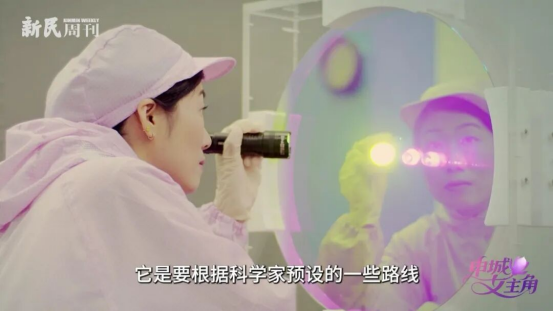
Yet developing large-aperture thin films is far from a simple scaling-up exercise — the technical difficulty grows exponentially. To illustrate the scale of the challenge, Zhu uses a vivid analogy: “The required film thickness control precision for a one-meter polarizing thin film element is equivalent to demanding that an aircraft flying the 1,000-kilometer route from Shanghai to Beijing experience no more than two millimeters of vertical turbulence along the entire journey.” Even a defect as tiny as one-thousandth the diameter of a human hair can cause the element to fail instantly under high-intensity laser irradiation, and potentially disable an entire high-value laser facility.
To achieve the breakthrough of developing meter-scale polarizing thin films from scratch, Zhu refined nearly 20 critical manufacturing processes through countless iterations. After years of working alongside the intense light of electron beam evaporation systems, a harsh white glow still lingers in her vision even when she closes her eyes.
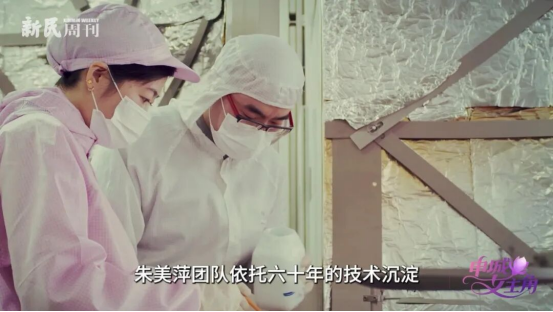
Years of relentless around-the-clock efforts finally paid off. In 2012, the laser thin film developed by Zhu's team claimed first place at the international thin film laser damage threshold competition held at the SPIE Laser Damage Symposium, outperforming the runner-up by 5% in performance. This marked the first time a Chinese laser dielectric coating had topped this prestigious international event.
Despite claiming the world's top spot, Zhu did not slow her pace of innovation. Her team pioneered a low-defect tunable composite fabrication technology and an exclusive thin film defect repair process, which allow elements to withstand high-intensity laser irradiation even with minor defects, greatly improving the operational stability of large-scale laser facilities. This core technology was awarded the Second Prize of the State Technological Invention Award in 2018.
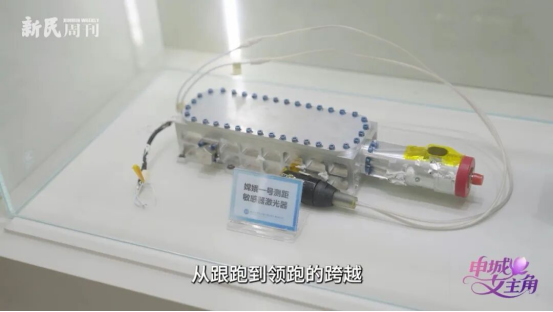
In 2019, Zhu's team returned to the international laser damage threshold competition and claimed the championship once again, with their film's performance outperforming the second-place entry by a striking 65%. Overseas peers who had once dismissed China's technological capabilities were forced to acknowledge that China's laser thin film technology had made a leapfrog advancement and now stood at the global forefront of the field.
As the fourth-generation lead researcher in laser thin films at the Shanghai Institute of Optics and Fine Mechanics (SIOM), Zhu has led her team to shatter the West's long-standing technological stranglehold on high-performance thin films, laying a solid core foundation for China's full range of mega-scale laser facilities.
A Heartfelt Initiative: Paving the Way for Women Researchers to Return to Science
After graduating from Zhejiang University, Zhu was recommended for direct postgraduate admission to SIOM, and she stumbled into the laser thin film laboratory almost by chance. She says her entry into the field was something of a happy accident, but once she committed to it, she threw herself into optical research wholeheartedly, with no regrets.
Yet staying the course in research as a woman demanded far more sacrifice than she had ever anticipated.
Her daughter was born in 2008, when Zhu had only been working at SIOM for two years and was still a doctoral candidate. She ran experiments and handled research tasks during the day, then returned home to care for her newborn in the evenings. once her daughter fell asleep, she would sit down to work on her doctoral thesis. It was routine for her to stay busy until 1 or 2 a.m. every day.
When her daughter started kindergarten, her parents — who had been helping with childcare — returned to their hometown, leaving the young family to manage everything on their own. The dual pressures of research and parenting mounted rapidly. Zhu admits that during that period, she even considered quitting research. “Luckily, there were many excellent senior female scientists at the institute who gave me the strength to keep going,” she recalls.
That experience gave her a deep, firsthand understanding of the barriers facing women in science and technology.
“Looking at graduate student cohorts, women now make up over 50 percent — they truly hold up half the sky. But the higher you climb on the career ladder, the fewer women you see. From early-career researchers to leading talents, academicians and Nobel laureates, the structure forms an inverted pyramid,” Zhu explains. She identifies childbearing as a major contributing factor.
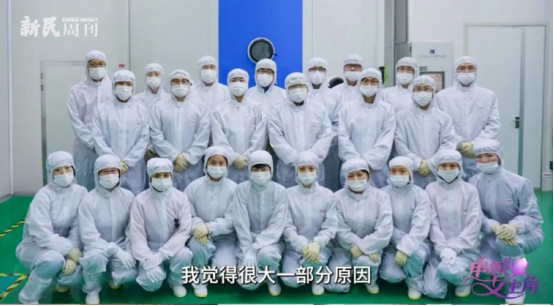
“Women naturally take on more responsibilities at home, and the prime years of a research career often coincide with the childbearing years. I've seen so many talented peers torn between their crying babies and their experimental data. In the end, many either regretfully step away from their research careers temporarily, or reluctantly leave their young toddlers behind to stay in the field.”
Research data further confirms this pervasive industry barrier. A survey of female researchers across Shanghai shows that 46.13% of respondents believe childbearing exerts a substantial impact on the career progression of female science and technology professionals, while only 12.08% consider it to have no bearing on their research work. The 30s and 40s represent the peak of research productivity, yet they also coincide with the primary childbearing years for many women.
In Zhu's view, “What female researchers need is not sympathy, but a shift in social mindset — from seeing them as needing 'special accommodations' to recognizing their full professional value.” In 2024, in her capacity as a deputy to the Shanghai Municipal People's Congress, she submitted a proposal to set up a dedicated return fund for women in scientific research.
With joint promotion from the Municipal Science and Technology Work Committee, the Shanghai Municipal Women's Federation and the Shanghai Association of Female Scientists and Technologists, the Women in Science Return Program was rolled out on a pilot basis in September 2025. Through financial grants and full-cycle support, it helps female science and technology workers navigate the breastfeeding period smoothly and return to frontline research roles.
Though she is no longer able to benefit from the policy herself, Zhu finds deep fulfillment in watching younger peers reignite their career aspirations through the program. Her advocacy and persistent efforts stem not just from empathy as a fellow woman in science, but from a profound sense of duty and commitment as a researcher.
Thriving on Passion: How Family and Research Lift Each Other Up
To Zhu Meiping, women's meticulous attention to detail and quiet resilience are inherent, invaluable strengths in scientific research. She firmly believes women can fully establish themselves in hard technology fields, and deliver research achievements on par with anyone else.
After more than two decades immersed in laser thin film research, Zhu has never slowed her pace of exploration. She openly acknowledges that laser optics holds countless unsolved puzzles — enough to keep researchers busy for another 60 years and beyond. Scientific research, by nature, is a constant process of confronting obstacles and working through them. What sustains her drive comes not just from the two core systems in her lab, but also from her daughter, who sees her as a personal role model.
Because Zhu spends so much of her time in the lab, her daughter spent much of her childhood in her mother's office. On extra busy workdays, the girl would lay a mat on the office floor and wait around, playfully teasing her mother: there are three “babies” in the family. The two lab instruments are the older and younger “lab babies”, and she herself comes in last place.
Though Zhu cannot be with her daughter around the clock, her dedication to science has long become the most powerful example she could set for her child.
“May we all stay true to our original aspirations and dare to scale new heights,” Zhu often says. “May we each be a glimmer of light — illuminating our own path, and warming those who journey alongside us.” This is far more than a motto; it is the true portrait of her 20-plus-year pursuit of light.
A single glimmer of light can underpin the scientific mission of a nation's most advanced mega-science facilities. A single committed voice can support and inspire countless women building careers in research.
Over two decades of advancing laser technology, Zhu has proven through action that women scientists can lead national technological breakthroughs while lifting up their peers. As China forges ahead toward becoming a global science and technology powerhouse, Zhu and her team will remain rooted in frontline laser thin film R&D. Turning individual glimmers into a collective force, they continue to write an inspiring chapter for a new generation of women in science.
 Order Frenzy: Laser Earnings Reveal 10B+ Backlogs — Who Wins?
 AI Compute Land Grab: What 30 Laser Earnings Reports Reveal
 Action-Cam Pioneer's Optical Pivot? GoPro to Sell Itself to Optics Firm for $285M
 Wuhan Team "Grows"Next-Gen Photovoltaic Film to Let Solar Panels Harvest More Sunlight
 Vietnam Plant + Europe Upgrade: Laser Leader Deepens Global Push
 Yang Gaojie, Rationalite Photonics: 3D Optical Computing to Break AI's Compute Wall
 Kingfit's Jin Songqing: Powering the Laser Industry Chain with Advanced Cooling Technology
 Laserion: Breaking Ultrafast Laser Bottlenecks to Industrialize Homegrown High-End Sources
 XTRI-tech's Yao Caihong: Building High-End Manufacturing
 Glitterin Tech's Three Photonic Pillars: Building the Optical Backbone of the AI Era