
Chen Kangkang of Anyang Laser: The "Hard Tech Long March" Behind a Single Optical Fiber
source:HUST
keywords:
Time:2026-04-07
Source: School of Optical and Electronic Information, HUST 11th Mar 2026
A single specialty optical fiber can be worth up to 200,000 yuan per meter; a single laser can cut display panels, engrave chips, and help myopic people regain clear vision. Over more than 20 years, Chen Kangkang has turned lab experiments from academic papers into an indispensable “light” for China’s high-end manufacturing.
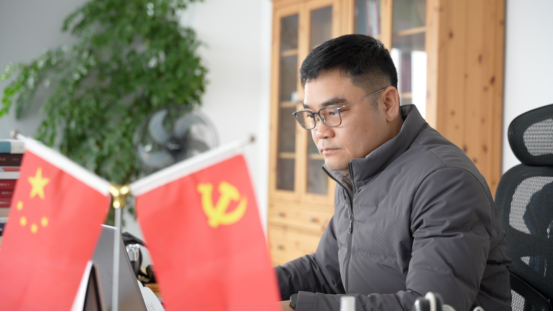
Chen KangkangChairman & General Manager Wuhan YSL Photonics Technology Co., Ltd.
In 2025, on the OLED production line of Wuhan Tianma Microelectronics, a domestic femtosecond UV laser performed cutting with micron-level precision – a role that only years ago was filled exclusively by expensive imported equipment.
The company that broke this monopoly is YSL Photonics, based in the Optics Valley of China. Its founder Chen Kangkang is an alumnus of the Class of 2000 from the School of Optical and Electronic Information, Huazhong University of Science and Technology (HUST).From the labs at HUST, to cutting-edge research at the University of Southampton in the UK, and back to the industrial heartland of Optics Valley, this “light seeker” has spent over two decades building a fully independent innovation chain – from specialty optical fiber materials to complete laser systems.
01. From HUST to the World
"Today I am proud of HUST; tomorrow HUST will be proud of me."
Over two decades ago, when Chen Kangkang stepped onto the campus of Huazhong University of Science and Technology, this quote ignited a fire within him.
Born into a family with a business tradition, Chen Kangkang planted the seed of entrepreneurship as early as high school. "But back then, I had no specialized skills, so I focused on studying first." Pragmatism was his first choice.
On the advice of his family, he enrolled in the Optical Information Science and Technology program at HUST. During his studies, the teachers who linked classroom knowledge closely to the pulse of industry had the most profound impact on him. To this day, he remembers Professor Chang Dading, who did not dwell on dry principles but instead talked passionately about "where technology can be applied"; the optical fiber communication courses taught by Professors Sun Junqiang and Zhang Xinliang unfolded before him a booming hundred-billion-yuan market.
At HUST, he not only absorbed knowledge but also witnessed the early germination of the Optics Valley of China: companies like FiberHome and Yangtze Optical Fibre and Cable (YOFC) were on the rise, and the atmosphere of industry-university-research integration was growing stronger by the day.
"If you learn a professional skill but never apply it, it's essentially a waste of time." This strong belief in "applying what you learn" took root quietly in his heart. This perhaps explains all his subsequent choices—studying abroad, pursuing a PhD, and starting a business—all pointing to the same direction: translating technology into real-world applications to solve genuine problems.
"I wanted to see for myself how the most core optical fiber technologies are actually made."
02. Southampton: Witnessing the Closed Loop of Academia, Research and Industry
In 2006, driven by his persistent pursuit of optical fiber technology, Chen Kangkang traveled to the University of Southampton in the UK to pursue his PhD.

Southampton is hailed as the “Silicon Valley” of global optical fiber communications. His supervisor, Professor David J. Richardson, later became a Fellow of both the Royal Academy of Engineering and the Royal Society. The hollow-core fiber company he founded was eventually acquired by Microsoft at a high premium.
An interesting anecdote foreshadowed the start of this mentor‑student bond. Before leaving China, Chen bought a souvenir T‑shirt printed with “University of Southampton” from the student union and wore it to his interview. At first sight, the professor smiled and asked: “You already?”The T-shirt expressed not just admiration, but resolute determination.
During his time in Southampton, Chen took part in collaborative projects with companies including SPI and Fianium.“Not a single research project we did at the university was disconnected from industrialization.”He published over 40 papers during his studies, and several of his experiments later evolved into core product prototypes of YSL Photonics.
More importantly, Professor David J. Richardson’s dual role — a world-leading scientist and a successful entrepreneur — gave Chen a profound insight:there should be no gap between cutting-edge research and real-world market application.For the first time, he saw clearly the full chain: from optical fiber design and fabrication, to laser integration and validation.
By 2010, his lab work was nearly finished. While his classmates debated staying abroad for top labs or corporations, he was already packed.
“My research in the lab is complete. It’s time to go back and turn it into products.”
03. Forging a Light in the "Blue Ocean"
When Chen Kangkang returned to China with his technical blueprint in 2010, Wuhan Optics Valley was at a pivotal historical juncture.
That year, “Encourage innovation, tolerate failure” became the core spirit of Optics Valley’s development; the Future Science and Technology City broke ground in the eastern part of the valley; and the optical fiber and cable industry led by Yangtze Optical Fibre and Cable (YOFC) had grown to become the world’s largest. More profoundly, the FTTH (Fiber to the Home) project – defined as the “Wuhan Model” by the National Development and Reform Commission in 2006 and promoted nationwide – had reached over 750,000 households, making Wuhan China’s first large-scale fiber broadband city. Optics Valley was in a golden era of shifting from scale leadership to innovation-driven growth, deeply integrated into national strategies.
It was on this soil of industrial strength and innovative passion that Chen Kangkang launched his entrepreneurial journey. In 2010, he founded YSL Photonics with an initial funding of over 10 million yuan. His starting point was a series of emails sent to leading enterprises in Optics Valley: “I told them what I aimed to do and what I could deliver.”
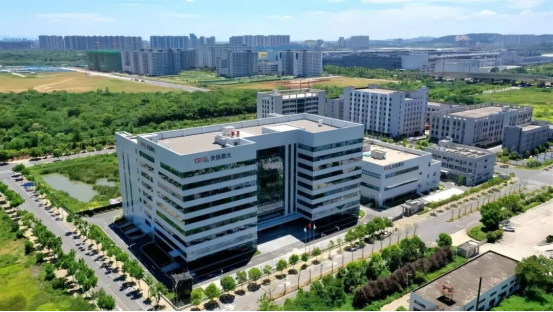
In the early days, China’s laser market was a fiercely competitive Red Ocean, with industrial nanosecond lasers locked in cutthroat price wars. Chen set his sights on a sparsely populated track: ultrafast lasers (picosecond/femtosecond lasers).“Refining a new technology takes years. We were not ready to compete on price and service with established players right from the start.”
His choice confronted a harsh reality: while fiber lasers were seen as the future for their exceptional stability from waveguide structure, the core technology – design and fabrication of high-end specialty optical fibers – had long been monopolized by foreign giants. At that time, most domestic peers bought commercial fibers for assembly, but Chen resolved to take a heavier, harder path: full-chain independent R&D, starting from the core optical fiber itself.
“Assembly has a low threshold and a shallow moat. What I wanted to build was a complete capability spanning fiber design, device fabrication, and system integration.”
This choice meant massive capital input and a long R&D cycle. In the first few years, the costly fiber R&D program was repeatedly shelved at board meetings – “No funding, no way forward.”
A turning point came in 2017. Introduced by a friend, Luo Zhuo and Lü Dalong, then heads of THG Venture(formerly TusPark Venture), visited YSL Photonics just before their flight back to Beijing. In just 30 minutes, the two sides reached a quick consensus.
“We were completely on the same page,” Chen recalled. An initial 28 million yuan investment arrived rapidly, with total follow-on funding exceeding 200 million yuan – providing critical fuel for fiber R&D. “The two post-60s investors are true long-termists. They still support us on the board to this day.”
Yet the real challenge had only just begun. “In fiber R&D, out of a hundred experiments, none may succeed,” Chen admitted frankly. “Tens of millions of funds poured in like water, and the pressure was enormous. But without such trial and error, we could never reach the standard threshold.”
On the innovation-friendly soil of Optics Valley, YSL Photonics poured investors’ trust and industrial expectations into that quiet yet critical technical deep track with near-obsessive focus. It was this devotion to core technology that forged its own irreplaceable light in the blue ocean of ultrafast lasers.
04. The "Leap of Faith" in Domestic Substitution
Light shines brightest when it breaks through monopoly. The collaboration with Tianma Microelectronics became the ultimate validation of YSL Photonics’ technical strength and its breakthrough debut battle.
Four years ago, when Chen Kangkang approached this “neighbor” with his self-developed high-power femtosecond laser, the response was full of doubt: “imported equipment works perfectly – why take the risk?”
The partnership took off only thanks to the matchmaking by the Optics Valley park and the strategic vision and courage of both management teams.
The process was no less challenging than climbing Mount Everest. To meet production-line requirements, YSL Photonics committed its entire R&D force to repeated testing and revisions at high cost. “We built 10–20 prototype machines for this single project; the whole company’s R&D and production revolved around it,” Chen recalled.In the end, the domestic femtosecond UV laser not only ran stably on the line but outperformed imports on key metrics, with significantly improved yield.
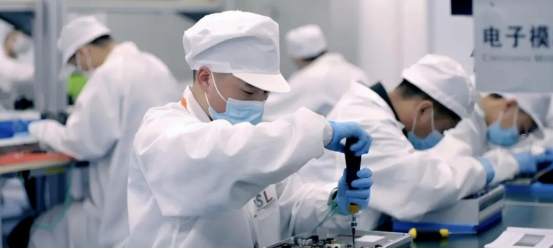
This success vividly demonstrated the full value of independent control: lower costs, supply chain security, and ultra-fast service response. The first victory of this “Chinese light” quickly set a demonstration effect, illuminating more domestic display lines at BOE, CSOT and other leading manufacturers.
Underpinning this breakthrough was the independent R&D of ultra-large mode area polarization-maintaining rare-earth-doped fiber, initiated as early as 2015. This “glass filament” – developed over 7–8 years and valuable per meter – is the heart of the laser and a key link in breaking foreign “stranglehold” blockades.
Today, YSL Photonics has grown into a national-level “Little Giant” enterprise with nearly 300 employees and dozens of key intellectual property rights. Yet Chen still describes his company as “small but beautiful”: “We focus on a niche market, bringing our technology to the same level as foreign players – or even stronger.”
05. HUST’s Responsibility in the Optics Valley Industrial Ecosystem
Chen Kangkang personally chose the name YSL Photonics.
“Soton” stands for Southampton, and “Yangtze” for the Yangtze River. This light began in Wuhan, was forged in the UK, and ultimately shines upon this innovative land along the Yangtze.
In Chen’s view, YSL Photonics’ growth is deeply rooted in the fertile industrial ecosystem of Optics Valley. “From the talent pool of universities like HUST and Wuhan University, to the complete industrial chain formed by enterprises such as YOFC and FiberHome, this region has built the most comprehensive optoelectronic ecosystem in China.” He is not only a beneficiary of this ecosystem but also an active builder and contributor.

Today, as an adjunct professor at the School of Optical and Electronic Information, Huazhong University of Science and Technology (HUST), he supervises PhD students, bringing the most urgent and real technical challenges from industry back to the classroom, closing the loop of academia, research and industry. This drive to give back stems from the spirit HUST instilled in him.
“The greatest trait of an engineer is perseverance,” he reflects. “From when I entered HUST in 2000 to study optoelectronics, to 2026, that’s exactly 26 years – and I have focused on only one thing.”
This almost single-minded focus and resilience are clearly reflected in his blueprint for the company:the short-term goal is to complete an IPO on the STAR Market during the 15th Five-Year Plan period;the greater vision is to make YSL Photonics an indispensable “Chinese force” in the global ultrafast laser sector.
This challenging path comes with inevitable growing pains, in a field crowded with strong competitors.Domestically, it faces leading players such as Raycus Laser and Maxphotonics;internationally, giants like IPG Photonics loom large.As a growth-stage company sprinting toward IPO, YSL Photonics still needs to accelerate its catch-up in brand influence, capital scale and market coverage.
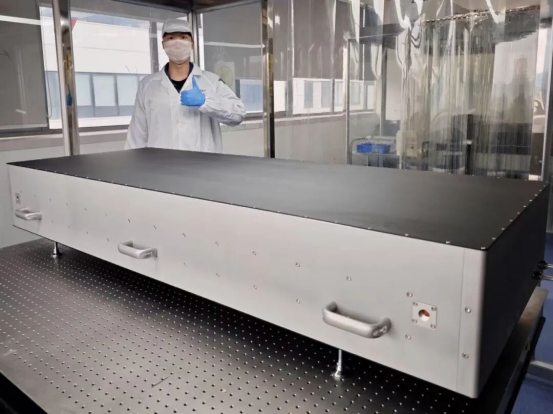
High-power model: FemtoYL-1000
Despite the difficulties, the vision is gradually becoming reality.The company has successfully delivered a kilowatt-class femtosecond UV laser to the Songshan Lake Light Source, a major national science and technology infrastructure. “For now, it remains a cutting-edge scientific instrument, but we firmly believe its industrial and large-scale commercial future will come,” Chen says with confidence.
06. Higher, Faster, Stronger
Inside YSL Photonics, the slogan "Higher, Faster, Stronger" on the wall stands out prominently. It is not only the Olympic spirit but also a technical belief embedded in the company’s DNA.
Looking five to ten years ahead, Chen Kangkang has set his sights on two core sectors: semiconductors and biomedicine."Semiconductors represent a clear industrial trend, while healthcare is a high-value market with enormous potential."At the same time, he is keenly aware of the profound changes brought by the AI wave:"The evolution of AI requires ultra-high-speed data processing and more natural human-machine interaction, all of which rely on advanced optoelectronic technologies. We are focused on solving technical challenges in one key niche within this grand ecosystem."
As an alumnus who has completed the full academia-research-entrepreneurship cycle, Chen’s advice to HUST juniors is simple yet powerful:"Be bolder, be braver. With so much knowledge, dare to explore and strive."
He also offers a solemn reminder as an entrepreneur:"Innovation must stem from real market demand; never innovate for innovation’s sake."He recommends young people read Wu Xiaobo’s Defeats, to understand the complexity of the business world and shared lessons. In his view, distinguishing whether a direction is a promising "blue ocean" or a risky "trap" requires deep industry experience and a global technical vision — precisely the core competence that engineers of the new era should cultivate.
07. Conclusion
From curiosity about a beam of light in the laboratory, to forging a precision cutting tool free from foreign constraints for China’s high-end manufacturing, Chen Kangkang’s 20-plus-year "laser Long March" represents a classic path of tech entrepreneurship: rooted in academia, oriented toward industry, and driven by independence.
In him, we see the shared traits of a generation of HUST optoelectronics professionals: solid technical foundation, long-term strategic patience, and deep industrial devotion. They do not chase short-term trends, but deepen their focus in one niche; they are not satisfied with assembly, but challenge core technologies.
In Optics Valley, and across China, countless "light seekers" like Chen Kangkang shine and converge in their own ways, ultimately forming the most brilliant galaxy of industries on this land.
 Order Frenzy: Laser Earnings Reveal 10B+ Backlogs — Who Wins?
 AI Compute Land Grab: What 30 Laser Earnings Reports Reveal
 Action-Cam Pioneer's Optical Pivot? GoPro to Sell Itself to Optics Firm for $285M
 Wuhan Team "Grows"Next-Gen Photovoltaic Film to Let Solar Panels Harvest More Sunlight
 Vietnam Plant + Europe Upgrade: Laser Leader Deepens Global Push
 Yang Gaojie, Rationalite Photonics: 3D Optical Computing to Break AI's Compute Wall
 Kingfit's Jin Songqing: Powering the Laser Industry Chain with Advanced Cooling Technology
 Laserion: Breaking Ultrafast Laser Bottlenecks to Industrialize Homegrown High-End Sources
 XTRI-tech's Yao Caihong: Building High-End Manufacturing
 Glitterin Tech's Three Photonic Pillars: Building the Optical Backbone of the AI Era