
Exclusive Interview with Academician Gu Bo: Escaping the Involution Trap in the Laser Industry
source:Dazhong News
keywords:
Time:2026-04-07
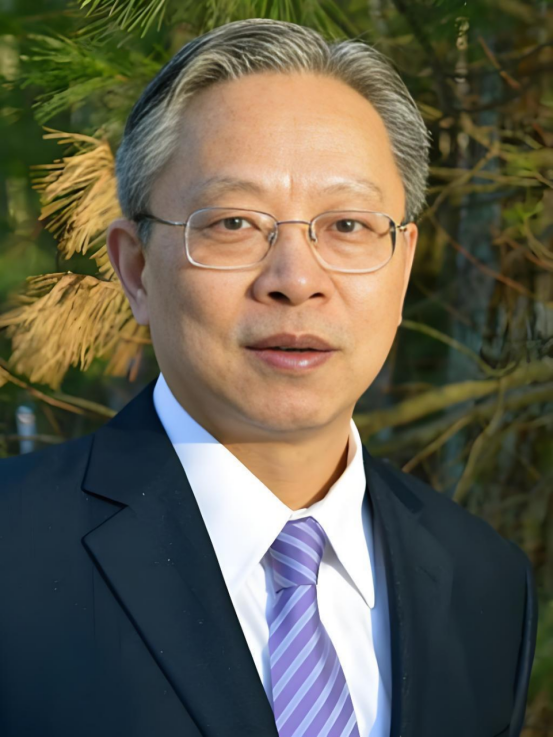
[Academician Profile]
Gu Bo, Fellow of the Canadian Academy of Engineering, currently serves as Deputy Secretary-General of the Chinese Optical Society (COS), Vice President of the International Commission for Optics (ICO) under the United Nations Educational, Scientific and Cultural Organization (UNESCO), and Vice President of the Laser Institute of America (LIA). He also holds professorships at Harvard University in the United States, Zhejiang University, and other domestic and international universities.
He is a pioneer and leading trailblazer in the global fields of solid-state lasers and high-power fiber laser technology. He has developed a series of world-first novel lasers and ultrafast laser materials, successfully broken through the bottlenecks of multiple generations of manufacturing processes for microelectronic devices, and reshaped the landscape of advanced manufacturing sectors including automotive, aerospace, new energy and sheet metal processing with innovative fiber laser and ultrafast laser technologies. As the founding figure behind the widespread global industrial application of fiber laser and ultrafast laser technologies, he has developed more than 30 types of laser products that are still widely used in factories around the world to this day.
In recent years, China's laser industry has gradually formed a development landscape featuring three core hubs: Shenzhen in the south, Wuhan in central China, and Jinan in the north. Backed by a strong equipment manufacturing foundation and a complete industrial system, Jinan is rapidly emerging as a key growth pole for China's laser industry. What are the strengths of Jinan's laser industry, and what bottlenecks must it break through? What is the next direction for its development? On the sidelines of the Laser Industry Conference held in Jinan, our reporter had an exclusive interview with Academician Gu Bo, a renowned expert in laser technology.
Dazhong News: From the perspective of scientific and technological self-reliance, what is the current global standing of China's laser industry?
Academician Gu Bo: In some fields, China's laser industry is already at the global forefront, even holding a leading position; in others, we are running neck and neck with international peers; and in some sectors, we are still playing catch-up. We cannot generalize across the board. Our strength lies in the fact that 35% of the world's manufacturing capacity is concentrated in China. Where there is application, there is feedback, which in turn drives technological iteration. For example, Chinese enterprises have excelled in electromagnetic welding for electric vehicles. With robust demand from domestic infrastructure, bridge construction and high-speed rail sectors, Bodor Laser's laser cutting equipment has seen its technology continuously refined and perfected through real-world application.
To take a more high-end example: silicon photonic chips for artificial intelligence. Why do we need silicon photonic chips? Because AI algorithms run at extremely high speeds, but massive data exchange has become a bottleneck. The traditional transmission medium is copper wire, but as transmission rates rise from 400G to 800G and then to 1.6T, the physical skin effect makes copper wires unable to meet demand. Just like the thick cables in home audio systems, which are actually made up of many thin copper wires to increase surface area, once a certain limit is reached, copper wires can do nothing more, and must be replaced by light — a trend known as optics replacing copper. Light is not inherently compatible with silicon, the material commonly used in electronic chips, which is why silicon photonic chips came into being. We are still playing catch-up in this field at present, but I am fully confident we will catch up. This requires enormous investment, which cannot rely solely on the market. The national government should provide initial support, before opening the field to enterprise competition. This is a trillion-yuan market, as is the low-altitude economy. Investors, governments and entrepreneurs alike all need to have patience, and at the same time, cultivate talent.
Dazhong News: What is your view on the development of the laser industry in Shandong? What suggestions do you have for its development?
Academician Gu Bo: From the perspective of the laser industry, Jinan in Shandong can be called a "Laser City". Jinan is building the Qilu Optics Valley, and in fact, we prefer to call it China Laser Valley. Although the scale of Jinan's laser industry is not the largest in China, it has extremely distinctive features. The most prominent one is that Jinan ranks first in China in terms of overseas exports of laser equipment. Guangdong, in second place, is close on its heels with a very narrow gap, so Jinan always has competitors catching up from behind.
For the development of Jinan's laser industry, I believe the top priority is to help local laser enterprises find a path to avoid homogeneous competition, in other words, to break free from the vicious cycle of involution. Jinan is home to more than 300 laser enterprises. If all of them make the same products, they will inevitably end up in an unprofitable situation. Is it possible for them to carry out division of labor and collaboration? This may require guidance from industry associations and the government. A few years ago, there were more than 900 enterprises manufacturing cutting machines across China, none of which were able to scale up, with annual output value stuck at only 10 to 20 million yuan.
The key to breaking through lies in upgrading the industrial chain and moving toward the high-end sector. Enterprises should keep an eye on the technological upgrading trends of the global laser industry, such as advances in ultrafast lasers, high-power lasers, and short-wavelength lasers, as well as the demand for laser and optoelectronic technologies in sectors such as big data and data centers brought by the rapid development of artificial intelligence. If they can tap into these emerging applications, they can enhance their overall competitiveness. I hope this China Laser Valley in Jinan will build a more competitive enterprise ecosystem, which is the only way to secure an invincible position in the market.
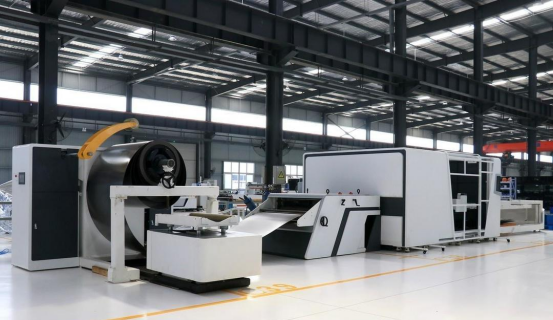
Dazhong News: This year's Government Work Report mentioned "foster and expand emerging industries and future industries". Should the development of the laser industry keep an eye on industrial trends?
Academician Gu Bo: Absolutely, we must follow new industrial trends. Take the low-altitude economy for example, which applies a vast amount of optoelectronic technologies. The aircraft used in the low-altitude economy are not made of traditional steel, but chemical fiber composite materials. Cutting this type of material is completely different from cutting metal, requiring the development of new processes. In addition, aircraft manufacturing involves massive demand for welding, as well as sensors including LiDAR. If we can upgrade alongside this trend and tap into precision machining sectors such as 5G/6G base station manufacturing, we can open up new growth space. In fact, there is no need to focus solely on large-scale processing for shipbuilding, automobiles and other heavy industries; precision machining also offers enormous opportunities.
If I were running an enterprise today, I would definitely examine our own strengths to find a suitable market entry point. The truth is, there are still very few scenarios where laser technology is widely applied in production, and the penetration rate of laser technology in industrial manufacturing is far from saturation. The crux is that entering new fields requires investment with a long return cycle. Investors must accept the reality of no returns for 3 to 5 years, and enterprises themselves need to hire postgraduates and experts for R&D. This is by no means a quick, easy, fast-payoff endeavor.
Dazhong News: Where lies the path to breakthrough for the development of Shandong's laser industry at present?
Academician Gu Bo: Jinan's laser industry in Shandong is export-oriented. Amid the current complex geopolitical landscape and global economic volatility, we hope to find a way to break through, or at the very least, work toward that goal.
From a global market perspective, sales revenue of welding equipment has surpassed that of cutting equipment: welding accounts for 55%, while cutting makes up 45%. In China, however, the ratio of cutting to welding is 2:1, meaning cutting takes up two-thirds of the market and welding just one-third. Why do entrepreneurs feel that the cutting machine market has hit a ceiling? Because most domestic cutting applications are still concentrated in the low-end segment, while high-end cutting still has untapped market potential. Though demand in the high-end segment is smaller, it supports higher unit prices.
In overseas markets, there is a clear stratification between high-end and low-end cutting equipment. If a company only does pure cutting, it faces an inherent limitation: whether it is a 1,000W, 10,000W or 100,000W machine, cutting equipment is essentially the same category of product. Welding equipment is different. The equipment required to weld auto parts is completely different from that used for mobile phone components, which creates room for added value. Welding is more easily transformed into tailored solutions, helping enterprises avoid homogeneous competition and find viable niche markets.
(Reported by Yang Xueying, Xiu Congtao, Dazhong News; Interns Li Junxue, Qiu Zerui)
 Five Laser Firms See Executive Reshuffles: Younger Leaders Take the Helm
 30+ Laser Startups Storm 2026: Who's Positioning for the Future?
 Three Chinese Laser Makers Expand Into South Korea: Raycus, YIFI and Strong Laser
 Hyperline Debuts at ESSEN 2026 with Premium Laser Welding Solutions
 56 Benchmarks Honored: 9th Secret Light Awards Highlights China Laser Chain Innovation
 Glitterin Tech's Three Photonic Pillars: Building the Optical Backbone of the AI Era
 A Female Pioneer's 20-Year Quest for World-Leading Laser Thin Film Breakthroughs
 HSG Laser's He Hongming: Innovation Drives Laser Manufacturing Future
 Xi Jingyu from Mingyu Technology: Carving the Future of Hometown Industries with Laser
 Qiming Photonics: Nobel-Powered "Optical Engine" for the Computing Age