
Awardee Chen Weibiao Pushes Space Laser Tech to Build China's Aerospace Leadership
source:Aerospace China, Issue 10, 202
keywords:
Time:2026-03-03
Chen Weibiao established China's engineering and technology system for spaceborne lasers. He pioneered high-precision remote sensing methods for multi-parameter atmospheric environment monitoring using spaceborne lidar, as well as an integrated architecture for ranging, communications, and time-frequency transmission over coherent laser space links. He led landmark programs including the world's first spaceborne lidar for multi-parameter atmospheric detection and China’s first spaceborne laser, making pivotal contributions to China's major aerospace initiatives: the manned space program, lunar exploration, deep space exploration, the High-Resolution Earth Observation System (CHEOS) special project, and national space infrastructure development.
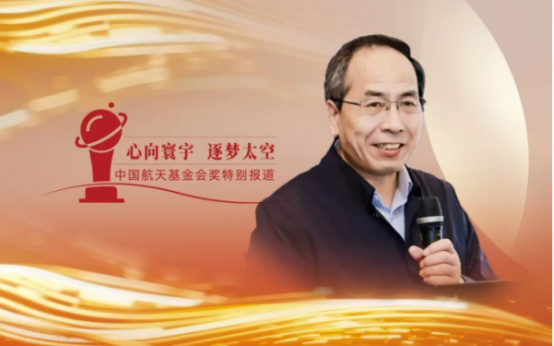
Space laser technology is a core pillar for building space information network infrastructure and advancing aerospace science and technology. In China's aerospace sector, Chen Weibiao led the formation of the Chinese Academy of Sciences (CAS) Space Laser Innovation Team, and built an R&D base and reliability assessment center for high-reliability, long-lifetime spaceborne lasers. He was the first in China to develop a novel architecture for integrated remote sensing with spaceborne atmosphere-ocean lidar, and a complete system framework for free-space laser communications. He also led the development of a series of landmark systems, including China's first spaceborne lidar for joint carbon dioxide and aerosol detection, inter-satellite laser communication systems, and space-air-ground-sea integrated laser communication systems. To date, nearly 100 sets of spaceborne lasers developed under his leadership have been launched into orbit, delivering critical support to China's major national aerospace missions including lunar exploration, manned spaceflight, Mars exploration, the CHEOS special project, and national civil space infrastructure development.
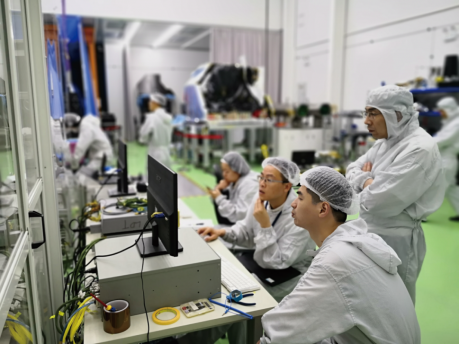
Figure 1. Chen Weibiao Leading His Team to Tackle Key Technical Challenges in the Project
Breakthrough Innovations Securing Global Leadership in Space Laser Technology
Developing spaceborne lasers has been likened to "performing precision embroidery in outer space". Chen Weibiao's team has summarized four core technical challenges in this field: high-efficiency thermal conduction, impact resistance, vacuum environment adaptability, and long-lifetime operation at high performance. Each of these represents a critical technical hurdle that must be addressed.
The foremost challenge is radiation and conduction cooling. In solid-state lasers, heat is concentrated in an extremely small area and must be dissipated to the cold background of space. For this reason, highly efficient thermal conduction with minimal temperature gradient is critical to ensuring laser performance. Chen's team invented an integrated conduction-cooled pumping technology, which successfully resolved the engineering challenges of high thermal conductivity, high pumping efficiency, and compact integrated design. This innovation achieved a pumping efficiency of over 90%, and a thermal conductivity performance that limits temperature gradient to below 4℃ at 200W pumping power.
During launch and in-orbit operation onboard a spacecraft, the laser must withstand intense mechanical shock and extreme temperature swings, while maintaining stable high performance—an immense challenge for a high-precision system composed of numerous delicate optical components. Furthermore, for deep space exploration applications, lasers must meet strict requirements for miniaturization and lightweight design. For example, when developing the laser for Martian rock composition detection, the total mass allocated to the laser was just 600 grams, with a mandatory requirement for stable operation across an extreme temperature range from -60℃ to 30℃. After repeated experiments, Chen and his team innovated and developed a passively Q-switched, mechanically insensitive cavity structure and a VCSEL wide-temperature pumping architecture, ensuring the laser's stable and reliable operation in the Martian environment.
To guarantee long-term stable operation of various high-performance lasers, Chen's team also developed and mastered glue-free packaging technology to prevent damage induced by vacuum contamination, as well as hybrid fiber-solid amplification technology. They further established a reliability assessment center for space laser optoelectronic devices, to verify the safe and reliable application of every component in spaceborne laser systems. To date, multiple spaceborne lasers developed by the team have achieved the best comprehensive performance among international counterparts of the same class. These lasers have been successively deployed on Earth observation satellites for applications including 3D land mapping, ecological resource survey, and atmospheric composition detection.
Securing the Strategic High Ground: Empowering China’s Dual Carbon Strategy with Global Leadership in Space Laser Technology
In 2022, with the successful launch of the Daqi-1 Satellite, the world's first spaceborne lidar for simultaneous detection of carbon dioxide and aerosols entered in-orbit operation. Chen Weibiao and his team accomplished what was deemed an impossible mission: achieving simultaneous monitoring of aerosols (air pollutants) and carbon dioxide from a single satellite. With carbon dioxide detection precision better than 1 ppm, the system filled the global gap in monitoring diurnal variations of carbon dioxide over the Earth’s polar regions. From individual components to complete systems, from following global peers to leading the field, Daqi-1 delivered an exceptional and inspiring breakthrough.
This landmark achievement, however, began amid widespread skepticism. In 2015, NASA experts described Chen's team's proposed approach as "too high-risk"—with the unspoken implication that it could not be realized. Conventional laser technology faces an inherent trade-off between high-energy output and long-term frequency stability. Yet the differential absorption lidar (DIAL) method used for carbon dioxide detection places exacting demands on lasers: both long-term frequency stability and high pulse energy output are non-negotiable. Undeterred, Chen's team pursued bold innovation and successfully mastered the key technologies for multi-wavelength laser frequency stabilization and hybrid-architecture energy amplification. After rigorous repeated verification, the team achieved the world's first multi-band frequency stabilization and high-energy output from a single lidar system, breaking through the long-standing technical bottleneck and delivering a robust foundation for high-precision detection.
Meanwhile, to validate the lidar's carbon dioxide measurement accuracy, the team developed innovative calibration equipment capable of simulating the full atmospheric column environment under laboratory conditions: a 40-meter-long, 300mm-diameter carbon dioxide absorption cell with controllable temperature and pressure. This system verified the lidar's measurement precision and trueness at 1 ppm concentration resolution, ensuring all system parameters were fully calibrated before launch to deliver reliable performance for end users.
Lidar systems are inherently complex, and the development process is fraught with challenges. Every detail demands extreme patience and rigorous scientific rigor, as even the tiniest error can compromise the final results. With solid professional expertise and unwavering perseverance, Chen and his team conducted precise measurements and strict tests on every detail of the lidar's transmission, reception, and calibration systems to guarantee measurement accuracy. Chen often emphasizes to his team the invaluable aerospace ethos that "details determine success or failure".
In April 2022, Daqi-1—the world's first satellite equipped with a spaceborne lidar for atmospheric carbon dioxide and hyperspectral aerosol detection—was successfully launched, making China the first country worldwide to achieve high-precision laser remote sensing of global greenhouse gases and aerosols. For the first time in human history, global column concentrations of carbon dioxide over the polar regions and during nighttime across the globe were obtained, with a matching precision better than 1 ppm. This achievement not only pioneered spaceborne lidar remote sensing of greenhouse gases, but also delivers authoritative Chinese data to support the nation’s Dual Carbon Strategy, serving as a key initiative by China to advance global climate change research.
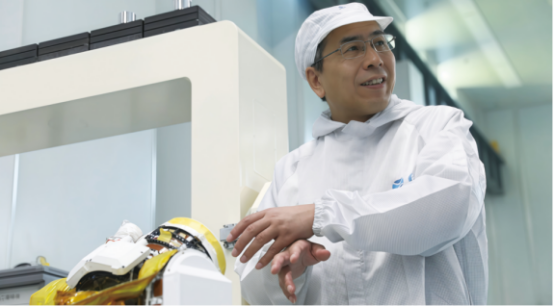
Figure 2. Chen Weibiao Conducting Product Testing
Passing the Torch: Nurturing the Next Generation of Space Laser Application Professionals
In Chen Weibiao's view, aerospace engineering is a systematic undertaking, where every team and every individual plays an indispensable role. He often tells his team members: "When it comes to aerospace missions, the most critical qualities are meticulousness and an unshakable sense of responsibility." He once spent 3 consecutive months sleeping on a camp bed at the institute, leading from the front to ensure the development and delivery of the application system for China's Space Station (CSS). He has personally practiced the manned space spirit, defined by the core ethos of "exceptional hard work, exceptional combat capability, exceptional breakthroughs, and exceptional dedication".
From the Chang'e Lunar Exploration Program to the Daqi-1 Satellite, Chen Weibiao’s team has spent 20 years advancing China's spaceborne laser technology from a landmark zero-to-one breakthrough to global leadership. They have always kept the country's top priorities in mind, remained committed to scientific and technological innovation, and upheld the lunar exploration spirit and manned space spirit. When founded in 2001, the team had only a handful of members; today, it has grown to more than 200 people. Starting from the development of a single spaceborne laser, it has expanded to build multiple application systems based on high-performance spaceborne lasers, covering spaceborne lidar remote sensing, space laser communications, space science and other frontier fields. The growth of this team is the perfect microcosm of China's aerospace development. "As the country's aerospace missions grow in scale and complexity, we need to let more young people take on core responsibilities," he says. He devotes a great deal of energy to nurturing young talent, with the core goal of passing down the aerospace spirit to future generations.
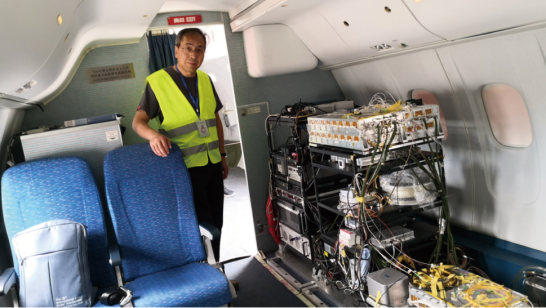
Figure 3 Chen Weibiao at Work
Forward-Looking Strategic Layout: Pioneering New Future Directions for Space Laser Technology
As Chen Weibiao famously remarks: "Lasers illuminate not just the far reaches of deep space, but also the future of China's self-reliance and self-strengthening in science and technology." From Chang'e-1 to Chang'e-7, from lunar and Mars exploration to Earth observation, on this starry journey to the cosmos, Chen Weibiao has always set his sights on the cutting edge of aerospace technology, scaled the heights of scientific discovery, and written a remarkable chapter for China’s aerospace community through relentless scientific and technological innovation.
Chen Weibiao often says: "Aerospace missions demand absolute rigor, but that does not mean we should be conservative and shun innovation." Going forward, the team will stay focused on national strategic needs, and continue to break new ground in deep space exploration, space science, Earth observation, space security and other key fields. Space laser technology will evolve toward higher precision, greater miniaturization, and enhanced intelligence, unlocking an even broader spectrum of space laser applications. The team will continue to pursue frontier exploration and innovation, making even greater contributions to the development of China's aerospace industry.
 Vietnam Plant + Europe Upgrade: Laser Leader Deepens Global Push
 Three global heavyweights step up their China bets: What's behind the move?
 Big Four laser earnings: Winners, losers, and the ones fighting back
 Photonic chips land ¥1.1B in orders, funds, and financing
 Five Laser Firms See Executive Reshuffles: Younger Leaders Take the Helm
 Laserion: Breaking Ultrafast Laser Bottlenecks to Industrialize Homegrown High-End Sources
 XTRI-tech's Yao Caihong: Building High-End Manufacturing
 Glitterin Tech's Three Photonic Pillars: Building the Optical Backbone of the AI Era
 A Female Pioneer's 20-Year Quest for World-Leading Laser Thin Film Breakthroughs
 HSG Laser's He Hongming: Innovation Drives Laser Manufacturing Future