
Lidar Titans' 2025 Results Showdown: Which Comes Out on Top?
source:Laserfair.com
keywords:
Time:2026-04-07
Source: Laserfair.com 27th Mar 2026
Recently, Hesai Group and RoboSense, the two leading players in the LiDAR industry, have successively unveiled their 2025 "report cards", raising the question: who is accelerating growth, and who is shifting strategic gears?
On March 24, 2026, Hesai Group took the lead in releasing its financial report, recording full-year revenue of over 3 billion yuan and becoming the first company in the industry to achieve full-year GAAP profitability. Hot on its heels, RoboSense published its financial results on March 25, posting full-year revenue of 1.941 billion yuan and its first-ever quarterly profit in the fourth quarter of 2025.

The financial reports show that both LiDAR firms have demonstrated strong growth momentum, while each boasts distinct strengths in technology roadmaps, market footprint and profitability.
1
Profitability Showdown: Hesai Takes the Lead in Profitability Breakthrough, RoboSense Hits Inflection Point with Quarterly Profit
As expected, the profitability inflection point for the LiDAR industry arrived right on schedule in 2025.
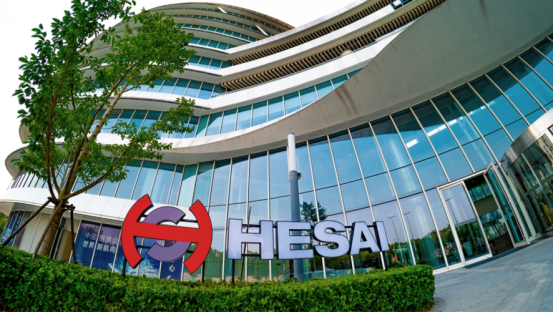
The latest financial report released by Hesai Group shows that it achieved a GAAP net profit of 436 million yuan and a Non-GAAP net profit of 551 million yuan in 2025, representing a staggering year-on-year surge of 3922%. This marks the company’s 3rd consecutive quarter of GAAP profitability and 5th consecutive quarter of Non-GAAP profitability, further cementing its position as the first publicly traded company in the LiDAR industry to deliver full-year GAAP profitability.
A day later, on March 25, RoboSense unveiled its financial results for the fourth quarter and full year of 2025. According to the report, while the company still posted a full-year net loss attributable to parent company shareholders of 146 million yuan, the figure narrowed by nearly 70% year-on-year. More critically, the company recorded its first-ever quarterly profit in the fourth quarter of 2025, with a net profit of 104 million yuan, marking the substantive arrival of its operational inflection point.
That said, the two companies have taken distinct paths to profitability. Hesai has achieved "two-wheel driven growth" by leveraging the scale effect of its ADAS business and the high gross margin of its robotics business. For RoboSense, the fourth quarter of 2025 saw a fundamental shift in its revenue structure — the revenue contribution from robotics and other products reached 49% for the first time.
2
Delivery Volume Competition:
Hesai Leads in Total Volume, RoboSense’s Robotics Business Sees Explosive Growth
In 2025, LiDAR has evolved from a "high-end optional feature" to a "standard safety feature", with market demand in an explosive upward trend.
Hesai’s total annual LiDAR deliveries reached 1.6204 million units, a year-on-year increase of 222.9%, more than tripling the 501,900 units in 2024. Among them, 1.3811 million units of ADAS LiDAR were delivered, up 202.6% year-on-year; 239,300 units of robotics LiDAR were delivered, a staggering year-on-year surge of 425.8%. According to the company’s plan, shipments will rise to 3 to 3.5 million units in 2026, with production capacity expanded to over 4 million units.
ImageMeanwhile, RoboSense’s total annual LiDAR sales reached approximately 912,000 units, a year-on-year increase of 67.6%. By business segment, sales of ADAS products hit 609,000 units, up 17.2% year-on-year; sales of robotics and other products reached 303,000 units, a sharp year-on-year jump of 1141.8%. Particularly noteworthy, in the fourth quarter of 2025, RoboSense’s sales of robotics products reached 221,200 units, a year-on-year increase of 2565.1%, presenting explosive growth.
In terms of market share, Hesai firmly holds the top position in the field of forward-facing main LiDAR as standard pre-installed equipment for China’s passenger vehicles. According to data from GGAI (Gaogong Intelligent Automotive) and Gasgoo Automotive Research Institute, the total installed volume of main LiDAR in China’s passenger vehicle market reached 2.756 million units in 2025, with Hesai contributing 1.143 million units, ranking first in the market for 11 consecutive months. RoboSense has secured multiple No.1 positions in niche markets such as global 3D LiDAR for robotic lawn mowers and LiDAR for autonomous delivery vehicles in China.
3
Business Layout Breakdown:
Two-Wheel Drive Becomes Consensus, Each Focuses on Different Segments
Notably, competition in the LiDAR industry is shifting from pure hardware delivery to a comprehensive contest of "chip + algorithm + ecosystem".
Hesai took the lead in achieving breakthroughs in in-house chip development. In 2025, the company launched Fermi C500, its main control chip for LiDAR, and plans mass production in 2026. As of November 2025, cumulative shipments of Hesai chips exceeded 185 million units, ranking first globally. The application of AI technology is also key to Hesai’s cost reduction and efficiency improvement — by empowering the entire R&D, manufacturing and operation chain with AI, the company achieved 46% revenue growth while cutting R&D expenses by 11.1% year-on-year in the fourth quarter.
RoboSense also regards in-house chip development as a core strategy. In Q4 2025, the gross margin of ADAS products rose to 22%, up 3.9 percentage points month-on-month, mainly driven by the continuous cost-saving effect of self-developed chips. CEO Qiu Chunchao stated at the earnings briefing that 2025 marks a transformative year for the LiDAR industry. Through digital products, the company has fully entered large-scale delivery, achieving optimized revenue structure and improved profitability.
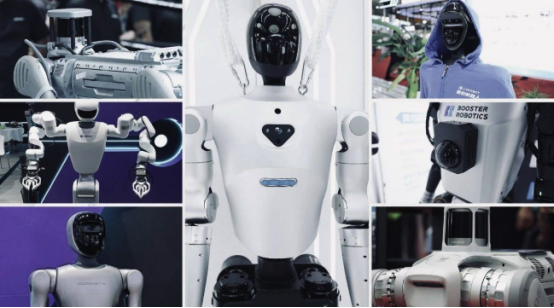
The robotics business has become the "second growth curve" for both companies. Hesai’s JT128 LiDAR is equipped in Unitree’s humanoid robot that appeared at the 2026 Spring Festival Gala, and Hesai signed an exclusive supply agreement with Dreame Technology for 10 million JT-series LiDAR units. RoboSense, meanwhile, has partnered with global leaders including Agtonomy and Coco Robotics to achieve large-scale deployment in agriculture, cleaning, delivery and other scenarios.
 Vietnam Plant + Europe Upgrade: Laser Leader Deepens Global Push
 Three global heavyweights step up their China bets: What's behind the move?
 Big Four laser earnings: Winners, losers, and the ones fighting back
 Photonic chips land ¥1.1B in orders, funds, and financing
 Five Laser Firms See Executive Reshuffles: Younger Leaders Take the Helm
 Laserion: Breaking Ultrafast Laser Bottlenecks to Industrialize Homegrown High-End Sources
 XTRI-tech's Yao Caihong: Building High-End Manufacturing
 Glitterin Tech's Three Photonic Pillars: Building the Optical Backbone of the AI Era
 A Female Pioneer's 20-Year Quest for World-Leading Laser Thin Film Breakthroughs
 HSG Laser's He Hongming: Innovation Drives Laser Manufacturing Future