
Laser Soldering: The Core Welding Technology Empowering Automated Production in 3C Electronics
source:Dayan Intelligent Manufacturin
keywords:
Time:2026-04-07
Source: Dayan Intelligent Manufacturing 10th Mar 2026
As the 3C electronics industry undergoes rapid iteration toward miniaturization, high density and flexibility, automated production lines have become the core support for enterprises to reduce costs, improve efficiency and ensure product quality. In key production processes such as chip-level packaging, board-level assembly and interconnection of precision components, the stability, accuracy and efficiency of the soldering process directly determine product competitiveness. Traditional soldering technologies (e.g., iron soldering, wave soldering) are limited by shortcomings such as contact-based operation, uneven heat input and insufficient accuracy. They can hardly meet the processing requirements of 0.15 mm micro pads and 0.25 mm narrow-pitch solder joints, let alone the continuous operation demands of automated production lines.
With its core advantages of non-contact operation, high precision, low heat input and strong controllability, laser soldering technology has gradually broken through the bottlenecks of traditional processes and become an indispensable core component in the automated production of 3C electronics. based on more than 20 years of practical experience in precision laser solder ball bonding, this paper systematically analyzes the core logic of laser soldering adapting to 3C automated production, deeply dissects its application value in key scenarios, and demonstrates the supporting role of professional laser soldering equipment in the automation upgrade of 3C electronics combined with technology implementation practices.
I. Welding Pain Points and Technical Demands in Automated 3C Electronics Production
The production process of 3C electronic products (mobile phones, computers, smart wearable devices, etc.) covers multiple links from component manufacturing to complete machine assembly. As the core process for component interconnection, welding faces multiple technical challenges. Especially in automated production lines, the welding process must not only meet precision processing requirements but also adapt to high-speed, continuous and stable operation. The limitations of traditional welding technologies have become increasingly prominent, with core pain points concentrated in three dimensions.
Pain Point 1: Precision Bottleneck Caused by Miniaturization and High Density
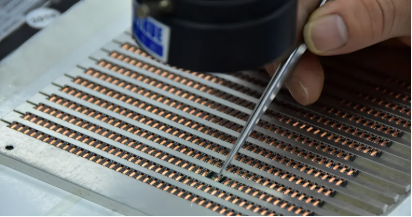
The integration level of components in current 3C electronic products continues to rise. Pad sizes have gradually shrunk from the traditional 0.5mm to 0.15mm, pad pitches compressed from 0.4mm to 0.25mm, and even smaller micro solder joints have emerged (such as VCM (Voice Coil Motor) solder joints in camera modules). The soldering head size of traditional iron soldering cannot match micro pads, easily leading to defects such as pad damage, solder ball spattering and bridging. Although wave soldering is suitable for mass production, it lacks control over narrow-pitch solder joints and cannot precisely regulate solder volume and welding temperature, resulting in poor solder joint consistency and difficulty in stabilizing the yield rate above 99%.
The demand for welding precision in automated production lines is reflected not only in dimensional control but also in accurate positioning of solder joint locations. In high-speed operation scenarios (e.g., mobile phone motherboard assembly lines with a takt speed of 3 pieces per minute), welding equipment must achieve micron-level positioning accuracy to avoid component damage caused by positioning deviations—a technical height unattainable by traditional welding equipment.
Pain Point 2: Protection Requirements for Heat-Sensitive Components
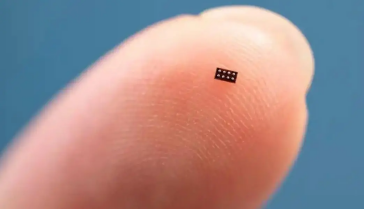
3C electronic products contain a large number of heat-sensitive components, such as sensors, wafers, camera modules, flexible printed circuits (FPC), etc. These components are extremely sensitive to heat input during the welding process. If the temperature exceeds 250℃ or the heat-affected zone is too large, the components are prone to performance degradation, deformation or even scrappage. Most traditional welding technologies adopt overall heating or large-area heating, with heat input difficult to control precisely, and the heat-affected zone is usually 1–2 mm, which cannot meet the protection requirements of heat-sensitive components.
In automated continuous operation, the heat accumulation effect further exacerbates this problem. After long-time operation of traditional welding equipment, the soldering tip temperature tends to fluctuate, resulting in unstable heat input. This not only affects solder joint quality but also greatly increases the risk of damage to heat-sensitive components, restricting the continuous operation efficiency of the production line.
Pain Point 3: Challenges in Balancing Automation Adaptability and Efficiency
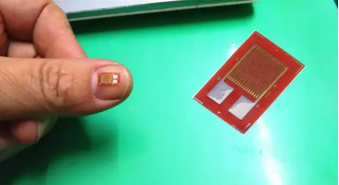
The core goal of automated 3C electronics production lines is to achieve "high-speed, continuous, low-loss" operation. However, traditional welding technologies have poor automation adaptability. Iron soldering relies on manual auxiliary positioning, making automated transformation difficult; in addition, the soldering tip wears out quickly and requires frequent shutdown for replacement, affecting production line takt time. Although wave soldering enables automated operation, it has a long changeover cycle (usually 2–4 hours), which cannot adapt to the multi-variety, small-batch production needs of the 3C industry, let alone the rapid changeover demands of flexible production lines.
In addition, most traditional welding processes require the use of flux, which adds an extra cleaning process after welding. This not only increases production processes and costs but also may lead to hidden dangers such as component corrosion and short circuits due to incomplete cleaning, contradicting the core demands of "high efficiency and cleanliness" for automated production lines.
Technical Demand: Precise Adaptation and Breakthrough of Laser Soldering
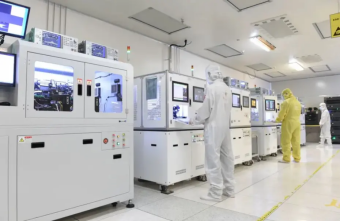
Faced with the core pain points of 3C automated production, laser soldering has achieved a comprehensive breakthrough over traditional processes with its unique technical characteristics. Its non-contact operation can precisely match the processing requirements of micro pads and narrow-pitch solder joints, with positioning accuracy reaching 0.15 mm; the local heating feature can control the heat-affected zone within 0.1 mm, effectively protecting heat-sensitive components; the flux-free clean soldering method eliminates the cleaning process and adapts to the high-efficiency operation needs of automated production lines. Meanwhile, laser soldering equipment has a short changeover cycle and can quickly adapt to multi-variety production, perfectly fitting the development trend of flexible automation in the 3C industry.
Drawing on more than 20 years of experience in precision component welding, Dayan Intelligent Manufacturing has optimized and developed a standard laser solder ball bonding machine in response to the pain points of 3C automated production. The machine deeply integrates welding speed, precision and automation adaptability, with a single-point welding speed of 3 balls per second and a stable yield rate of over 99.6%, providing an efficient and reliable welding solution for 3C automated production lines.
II. Core Technical Logic of Laser Soldering for Automated 3C Electronics Production
Laser soldering has become a core component of automated 3C electronics production mainly because its technical characteristics are highly compatible with the demands of 3C automation. Through precise control of laser energy, optimized welding processes and automated collaborative design, laser soldering achieves a four-way balance of "precision, efficiency, stability and cleanliness", providing core support for the efficient operation of automated production lines.
Precise Energy Control: Adapting to Miniaturization and Heat-Sensitivity Requirements
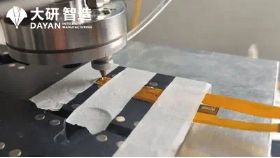
The core advantage of laser soldering lies in precise energy control, whose output stability directly determines welding quality. Tin has a melting point of approximately 230℃. By adjusting laser power (60–200W), wavelength (915nm/1070nm) and action time, laser soldering enables accurate melting and solidification of solder, ensuring dense and reliable solder joints. The self-developed laser generator from Dayan Intelligent Manufacturing controls energy stability within 3‰, and can dynamically match optimal energy parameters according to solder ball diameters (0.15mm–1.5mm) and pad sizes, avoiding defects such as solder spattering and cold joints caused by energy fluctuations.
To meet the protection requirements of heat-sensitive components, laser soldering adopts local heating. The laser spot can be precisely focused on the welding area, with heat acting only on the solder and pad, avoiding thermal damage to surrounding components. Paired with a nitrogen protection system (purity 99.99%–99.999%, coaxial air blowing), it effectively suppresses solder oxidation, improves solder joint quality, and further reduces thermal diffusion, providing dual protection for heat-sensitive components.
Automated Collaborative Design: Adapting to High-Speed Continuous Operation
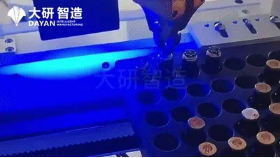
The automated collaborative design of laser soldering equipment is the core prerequisite for its integration into 3C automated production lines. The standard laser solder ball bonder from Dayan Intelligent Manufacturing is equipped with multiple precision subsystems, realizing fully automated control of the welding process:A high-efficiency image recognition and inspection system identifies pad positions in real time with a positioning accuracy of 0.15mm, ensuring precise welding locations;The high-precision solder ball supply system uses precision differential pressure sensors and high-speed AC servo motors for fast and accurate solder ball delivery. Paired with a self-developed solder ball jet mechanism, it can eject solder balls as small as 0.15mm in diameter, meeting the needs of micro-pad welding;The intelligent computer control system enables seamless docking with 3C automated production lines, supporting real-time collection and traceability of production data for overall line management and optimization.
In addition, the equipment adopts an integrated marble gantry platform with excellent thermal and mechanical stability, effectively avoiding vibration and deformation after long-term operation and ensuring stable welding precision. The welding head features an automatic cleaning system, with a nozzle life of 300,000–500,000 cycles, reducing downtime for maintenance and guaranteeing continuous production efficiency, perfectly matching the "high-speed, continuous" requirements of 3C automated lines.
Clean and Flexible Production: Adapting to Multi-Variety and Low-Cost Demands
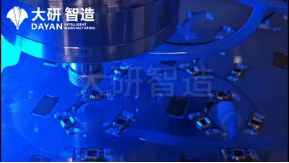
Laser soldering uses a non-contact, flux-free process that produces no contaminants and requires no post-welding cleaning. This greatly simplifies production flows, cuts costs, and eliminates hidden dangers from incomplete cleaning, aligning with the core requirements of "high reliability and clean production" for 3C products. The clean and eco-friendly features of Dayan Intelligent Manufacturing’s standard laser solder ball bonder allow direct integration into continuous 3C automation lines without extra auxiliary processes, boosting overall line efficiency.
To meet the multi-variety, small-batch production needs of the 3C industry, laser soldering equipment offers excellent flexibility. The standard machine supports fast switching of solder balls from 0.15mm to 1.5mm, and a three-axis adjustable laser design enables quick adaptation to different products, greatly shortening changeover cycles and fully satisfying the rapid changeover demands of flexible automated lines. Meanwhile, the equipment can be customized with non-standard structures to fit special welding scenarios for various 3C products, further enhancing the flexible adaptability of automated production lines.
III. Core Application Scenarios of Laser Soldering in Automated 3C Electronics Production
In automated 3C electronics production, laser soldering has been widely applied in multiple core scenarios. From micro-component welding to complete machine assembly, its technical advantages have been fully unleashed, making it a core support for ensuring product quality and production efficiency. Combined with equipment application cases from Dayan Intelligent Manufacturing, the key landing scenarios of laser soldering in 3C automated production are mainly concentrated in the following three areas.
Core Scenario 1: Micro Precision Component Welding
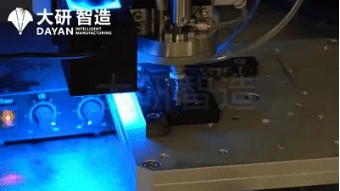
Micro precision components in 3C electronic products, such as camera modules, VCM voice coil motors, sensors, and data cable interfaces, are core application scenarios for laser soldering. These components typically have pad sizes of 0.15–0.3mm and pad pitches of only 0.25mm, requiring extremely high welding precision and heat input control. Traditional welding technologies struggle to accurately control solder joint size and position, often causing component damage. In contrast, the non-contact operation and precise positioning of laser soldering perfectly meet the welding requirements of such scenarios.
Taking mobile phone camera module welding as an example, internal components such as lens brackets and photosensitive chips are heat-sensitive parts. The welding temperature must be strictly controlled at 230–250℃, with a heat-affected zone of less than 0.1mm. The standard laser solder ball bonding machine from Dayan Intelligent Manufacturing achieves precise welding of camera module solder joints through accurate energy control and local heating, with positioning accuracy of 0.15mm and a heat-affected zone controlled within 0.08mm, effectively avoiding thermal damage to components. Meanwhile, the image recognition system equipped on the equipment can detect solder joint quality in real time, ensuring consistency with a stable yield rate of over 99.6%. At present, this equipment has been widely used in the camera module automated production lines of leading 3C enterprises, realizing "precise, efficient, low-loss" continuous operation.
Core Scenario 2: Motherboard and Board-Level Assembly Welding
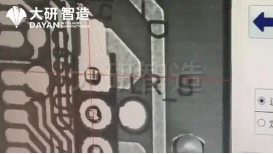
Motherboard and board-level assembly is a core link in 3C electronics production, involving the welding of components such as BGAs, PCBs, and connectors. It not only requires high-reliability solder joints but also must meet the high-speed operation demands of automated production lines. Although traditional wave soldering enables mass motherboard welding, it provides insufficient protection for micro and heat-sensitive components on the board, with high defect rates such as bridging and cold joints. Manual iron soldering has poor automation adaptability and cannot meet the high-takt requirements of motherboard assembly.
With its high-speed welding and precise control capabilities, laser soldering has become an ideal choice for automated motherboard and board-level assembly. The standard laser solder ball bonding machine from Dayan Intelligent Manufacturing achieves a single-point welding speed of 3 balls per second, adapting to the high takt of motherboard assembly. Its self-developed solder ball jet mechanism accurately controls solder ball volume, avoiding bridging defects caused by excessive solder while ensuring solder joint density and conductivity. Paired with the high stability of the integrated marble gantry platform, the equipment maintains stable positioning accuracy during continuous operation, preventing welding deviations caused by vibration. In mobile phone motherboard automated production lines, the equipment realizes integrated welding of connectors, antennas, studs and other components without manual intervention, increasing production line efficiency by over 30% and reducing the defect rate to below 0.4%.
Core Scenario 3: Complete Machine Structural and Functional Component Welding
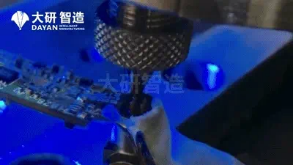
The welding of complete machine structural parts (such as mobile phone middle frames, LOGOs, Home keys) and functional parts (such as charging ports, earpieces, motors) in 3C electronic products has strict requirements for welding appearance, strength and reliability. Traditional welding technologies tend to leave scratches, solder residues and other defects on the welding surface, affecting product appearance. Meanwhile, the mechanical stress generated by contact welding may cause structural part deformation, impairing assembly accuracy.
The non-contact operation and low heat input characteristics of laser soldering effectively solve the welding challenges of complete machine structural and functional parts. Its non-contact welding method avoids damage to the surface of structural parts, with smooth, residue-free solder joints that require no subsequent polishing. Local heating reduces thermal deformation of structural parts, ensuring assembly accuracy. In addition, laser soldered joints feature high strength and good conductivity, effectively guaranteeing the long-term stable operation of functional parts. The standard laser solder ball bonding machine from Dayan Intelligent Manufacturing supports 3D welding and micro-space welding, adapting to the complex structure welding needs of mobile phone middle frames, charging ports and other components. Its three-axis adjustable welding head can quickly adjust welding angle and position to meet the requirements of different structural parts. At present, it has been successfully applied to the complete machine automated production lines of mobile phones, smart watches and other products, achieving dual guarantees of welding quality and appearance.
IV. Industrial Value of Laser Soldering in Promoting Automated 3C Electronics Production
The wide application of laser soldering technology in 3C automated production not only solves the core pain points of traditional processes, but also drives the automation upgrade and technological innovation of the 3C electronics manufacturing industry. Its industrial value is mainly reflected in three dimensions, serving as a key support for 3C electronics enterprises to enhance their core competitiveness.
Value 1: Improve Production Efficiency and Reduce Manufacturing Costs
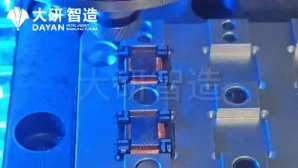
The automation adaptability and high-speed welding capability of laser soldering equipment can greatly boost the operation efficiency of 3C automated production lines. Compared with traditional iron soldering, laser soldering features a higher degree of automation, enabling unmanned continuous operation and cutting labor costs. Its high-speed welding characteristic (single-point welding speed of 3 balls per second) significantly accelerates production line takt time. Combined with the flux-free clean process that eliminates post-welding cleaning, it shortens production flows and improves overall efficiency. The standard laser solder ball bonding machine from Dayan Intelligent Manufacturing maintains a stable yield rate of over 99.6%, drastically reducing rework and scrap costs caused by welding defects. Meanwhile, the equipment has low maintenance costs: the welding head is equipped with an automatic cleaning system, and the nozzle service life reaches 300,000–500,000 cycles, reducing downtime for maintenance and spare part replacement, further lowering manufacturing costs for enterprises.
Value 2: Ensure Product Quality and Enhance Reliability
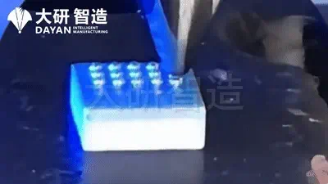
The quality and reliability of 3C electronic products directly determine consumer experience and brand reputation. The precise energy control and positioning of laser soldering guarantee consistency in solder joint size, shape and position, avoiding defects such as cold joints, bridging and solder spattering in traditional processes, and improving welding quality. Its local heating feature effectively protects heat-sensitive components, reducing damage risks and enhancing overall product reliability. In addition, laser soldered joints feature high strength, good conductivity and strong corrosion resistance, ensuring stable long-term performance and lowering after-sales failure rates. In high-end 3C-related fields such as military electronics and precision medical devices, the high reliability of Dayan Intelligent Manufacturing’s standard laser solder ball bonding machine has been fully verified, providing core support for quality assurance of high-end products.
Value 3: Adapt to Technological Iteration and Support Flexible Production
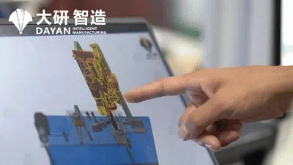
The 3C electronics industry features rapid technological iteration and short product renewal cycles, placing higher demands on production line adaptability. Laser soldering technology can be continuously optimized and upgraded to keep pace with the miniaturization and high-density trends of 3C products, adapting to stricter welding requirements by improving positioning accuracy and energy stability. Relying on fully independent R&D capabilities and over 20 years of industry customization experience, Dayan Intelligent Manufacturing can quickly optimize equipment parameters and structures according to customers’ product iteration needs, provide customized welding solutions, support flexible upgrades of customers’ production lines, and help customers respond rapidly to market changes.
Summary: Laser Soldering Leads a New Revolution in Automated 3C Electronics Production

Amid the wave of upgrading automated 3C electronics production toward "precision, flexibility and high efficiency", laser soldering technology has transformed from an "alternative technology" to a "core supporting technology" with its comprehensive breakthrough over traditional processes, becoming an indispensable part of 3C automated production lines. Its precise energy control meets the welding requirements of miniaturized and heat-sensitive components, its efficient automated collaborative design aligns with the demand for high-speed continuous operation of production lines, and its flexible adaptability supports the multi-variety, small-batch production characteristics of the 3C industry, providing core guarantee for 3C electronics enterprises to reduce costs, improve efficiency and enhance product quality.
 Vietnam Plant + Europe Upgrade: Laser Leader Deepens Global Push
 Three global heavyweights step up their China bets: What's behind the move?
 Big Four laser earnings: Winners, losers, and the ones fighting back
 Photonic chips land ¥1.1B in orders, funds, and financing
 Five Laser Firms See Executive Reshuffles: Younger Leaders Take the Helm
 Laserion: Breaking Ultrafast Laser Bottlenecks to Industrialize Homegrown High-End Sources
 XTRI-tech's Yao Caihong: Building High-End Manufacturing
 Glitterin Tech's Three Photonic Pillars: Building the Optical Backbone of the AI Era
 A Female Pioneer's 20-Year Quest for World-Leading Laser Thin Film Breakthroughs
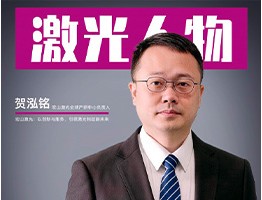 HSG Laser's He Hongming: Innovation Drives Laser Manufacturing Future