
US-Based Boom Supersonic Explores Laser Beam Engine Combustion Diagnostics
source:China Aviation News
keywords:
Time:2026-03-02
Source: China Aviation News 16th Jan 2026
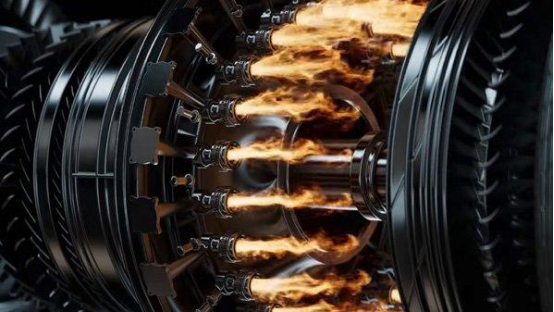

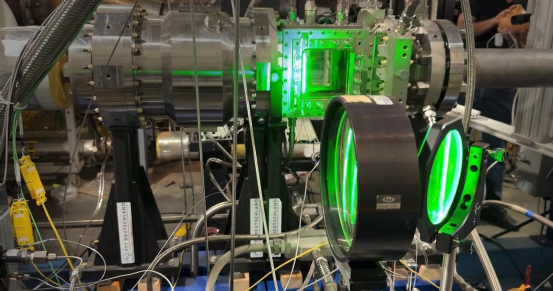
US-based Boom Supersonic is developing laser diagnostic technology to gain a more precise understanding of how fuel behaves once it enters an engine. The company is advancing the development of supersonic aircraft and engines, where the margin for error in supersonic jet engine development is extremely low—particularly in the combustion chamber, where fuel, air, heat and pressure converge—creating a critical need for new methods to study combustion behavior.
At a combustion test facility in the United States, Boom’s engineers use high-power lasers and high-speed cameras to visualize fuel spray and flame behavior in stunning detail. This work not only supports the R&D of the company’s supersonic engines, but also underpins the development of a derivative gas turbine being built for high-efficiency artificial intelligence data centers.
The tests were conducted at the Ben T. Zinn Combustion Laboratory at the Georgia Institute of Technology, where the company designed a single engine fuel nozzle for supersonic engine testing. The test setup will evaluate the high-pressure compressor, high-pressure turbine and combustion chamber. The laser beam is shaped by a series of mirrors, along with cylindrical and spherical lenses, to form a thin light sheet that passes through the fuel spray ejected from the nozzle.
The method they employ converts a circular laser beam into a thin light sheet; any fuel droplets passing through the sheet scatter the light. This phenomenon, known as Mie scattering, enables engineers to directly observe droplet size, spray distribution and uniformity. High-speed cameras capture thousands of frames per second, generating real-time visualizations of fuel atomization uniformity. By analyzing the light scattering from fuel droplets, the team can quantify droplet distribution and the uniformity of the fuel spray.
Uniform fuel injection is far more than just a refined improvement—it is critical to engine durability and efficiency. It is essential for ensuring even heat dissipation across all sectors within the engine, and non-uniform fuel injection will directly lead to uneven heat distribution.
Non-uniform combustion creates temperature gradients at the outlet of the combustion chamber, forming hot spots that impose asymmetric thermal loads on the turbine blades. Over time, this can reduce component service life or limit operating margin. Uneven exhaust temperature distribution from the combustion chamber can lead to chronic durability issues with the turbine blades.
In addition to spray visualization, Boom uses optical filters to directly image flame position, revealing where heat release occurs within the combustion chamber. This allows engineers to quickly identify whether combustion is uniform across the full operating range of the nozzle.
Variations in brightness from the top to the bottom or across the sides of the nozzle indicate poor injection performance on one side of the nozzle. The optimal engineering design delivers a uniform, hollow conical injection pattern from the nozzle orifice.
The laser diagnostic work is part of Boom’s broader propulsion system roadmap, which aims to progress from component-level testing to full engine validation. importantly, this work is not limited to the aerospace sector. The same research findings on combustion, efficiency and durability are also being applied to Boom’s gas turbines purpose-built for AI data centers, where efficiency, thermal management and reliability are equally critical.
With this model, Boom aims to conduct testing early in the design phase to de-risk the program as soon as possible, validate hypotheses with data, and use test findings to guide design decisions.
(By Hang Ke)
 Vietnam Plant + Europe Upgrade: Laser Leader Deepens Global Push
 Three global heavyweights step up their China bets: What's behind the move?
 Big Four laser earnings: Winners, losers, and the ones fighting back
 Photonic chips land ¥1.1B in orders, funds, and financing
 Five Laser Firms See Executive Reshuffles: Younger Leaders Take the Helm
 Laserion: Breaking Ultrafast Laser Bottlenecks to Industrialize Homegrown High-End Sources
 XTRI-tech's Yao Caihong: Building High-End Manufacturing
 Glitterin Tech's Three Photonic Pillars: Building the Optical Backbone of the AI Era
 A Female Pioneer's 20-Year Quest for World-Leading Laser Thin Film Breakthroughs
 HSG Laser's He Hongming: Innovation Drives Laser Manufacturing Future