
Laser communication is ushering in a silent revolution
source:Photonics spectra
keywords:
Time:2026-03-02
Source: Photonics spectra 2nd Feb 2026
Laser communication enables ultra-high-speed, secure data transmission. As this technology gradually matures and enters large-scale application, it is profoundly reshaping the landscape of satellite constellations, scientific missions and defense operations.
In September 2024, The New York Times reported on a high-profile space mission: a SpaceX capsule carrying two private astronauts completed multiple milestones, including the first-ever commercial spacewalk. The final line of the article is particularly noteworthy: "They also tested laser communications between the Crew Dragon and SpaceX’s Starlink internet satellite constellation."
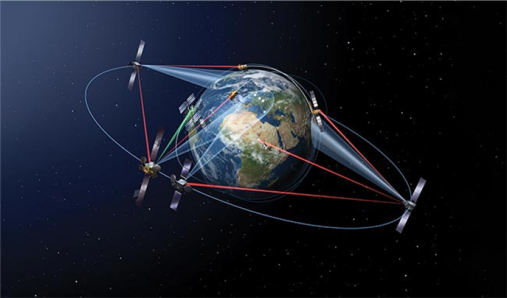
To date, most on-orbit satellites still transmit and receive data via radio waves or microwaves, primarily in the 3–31 GHz range (Ultra High Frequency, UHF), spanning from S-band to Ka-band. Starlink, which operates the world’s largest satellite constellation, has been authorized to use V-band frequencies in the 40–50 GHz range.
The higher the frequency and the shorter the wavelength, the greater the data capacity a single signal can carry. In this regard, the shift to laser communication is truly disruptive. The 1.5μm wavelength commonly used in telecommunications lasers corresponds to a frequency approximately 10,000 times higher than that of Ka-band radio waves. Lasers and electronic components for this band have already achieved full large-scale commercialization, with an extremely high Technology Readiness Level (TRL).
While Laser Communication Terminals (LCTs) took decades of development to reach maturity, the technology is now truly ready for large-scale deployment. Its development has been marked by numerous major technical challenges, such as pointing accuracy–it is no easy feat to target an ultra-narrow laser spot at a satellite traveling at around 30,000 km/h. This challenge, however, has been overcome, and the small diameter of the laser spot has instead become a key advantage: unlike radio waves, laser communications are far less susceptible to eavesdropping.
Of course, new technical challenges remain, such as micro-vibrations caused by the movement of reaction wheels and solar arrays. Even so, NASA has summed up the core strengths of LCTs in a single statement: "Compared with equivalent radio frequency (RF) systems, they deliver lower weight, lower power consumption, and a smaller footprint."
How Laser Communication Terminals Work
Research and development of LCTs began in the 1970s. Turning them into mature, ready-to-deploy products as we see today required major advances in several key areas, including laser technology.
A laser source is one of the core components of an LCT. Others include:a beam pointing and tracking system;a telescope for transmitting and receiving optical signals;and a detector that converts optical signals into electrical signals.
Spaceborne laser sources typically operate in the near-infrared band, with standard wavelengths of 1064 nm or 1550 nm. The beam pointing and tracking system ensures that the laser remains precisely aimed at the receiver even over distances of tens of thousands of kilometers.
Coarse pointing is usually achieved by a gimbal, with accuracy better than 1°. Fine-pointing systems compensate for vibrations, jitter, and relative motion, achieving alignment precision at the microradian level. Piezoelectric devices (piezos) are commonly used to deliver such high-speed, microradian-scale fine control. A beacon beam may also be employed to assist with pointing and tracking.
The telescope is the largest component in an LCT, and its aperture directly determines the overall system size and communication range. Even laser beams diverge when propagating over long distances. For this reason, LCT telescopes for geostationary Earth orbit (GEO) satellites must be larger than systems used for links between low Earth orbit (LEO) satellites, where distances are only a few hundred kilometers.based on diverse application requirements, leading LCT suppliers have developed a wide range of products in various sizes and performance classes.
At the receiving end, avalanche photodiodes (APDs) and advanced single-photon detectors convert optical signals into electrical signals. A data processing unit then performs modulation, error correction, and encryption to ensure reliable and secure communication.
When establishing a link, the transmitting terminal typically uses a spiral scan pattern. Through an initial random “hit”, the system gradually calculates the optimal pointing direction.The core challenge lies in coordinating multiple distinct inertial and reference frames:the coarse and fine pointing mirrors;the Earth and the Sun;and the orbital positions and attitudes of the transmitting and receiving satellites—each with its own coordinate system.
Toward a Space-based Laser Network
The first inter-satellite laser link was established in November 2001, when Artemis, a European geostationary satellite, successfully communicated with SPOT 4, an Earth observation satellite. The system used a 60 mW laser diode and a 25 cm aperture telescope, achieving a data rate of 50 Mbit/s, with a total mass of 160 kg and power consumption of 150 W.
LCTs were adopted for defense applications early in their development. In February 2008, a German-developed LCT was launched on the U.S. Missile Defense Agency’s NFIRE satellite to enable long-distance transmission of accelerated missile-tracking data.
In 2013, NASA initiated the Lunar Laser Communication Demonstration (LLCD), which successfully demonstrated communications at a peak rate of 622 Mbps over a distance of 385,000 km between the LADEE spacecraft and three ground terminals.
Computer rendering of the NASA LLCD optical module. The module, which included a 0.5‑watt laser transmitter, was mounted externally on the LADEE spacecraft and consisted of a 4‑inch diameter telescope on a two‑axis gimbal. The entire system weighed approximately 65 pounds.
In the same year, Alphasat in GEO orbit was launched to demonstrate GEO‑ground and GEO‑LEO laser links. In 2014, the OPALS payload on the International Space Station was successfully tested, downlinking a video of the 1969 Apollo 11 Moon landing in just 7 seconds—compared to roughly 12 hours using a traditional radio link.
Subsequently, LCTs were integrated on the Sentinel-1/2 (LEO) satellites and the European Data Relay Satellites EDRS-A/C (GEO), forming a “space data highway.” Inter‑satellite links of over 35,000 km between LEO and GEO are fully implemented via LCTs, with space-to-ground data rates up to 1.8 Gbps. The system has been in routine operation since 2016.
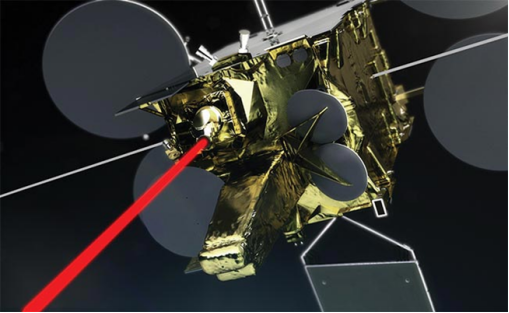
The European Data Relay Satellite (EDRS)-A is the first node of the EDRS system.
NASA’s Laser Communications Relay Demonstration (LCRD) entered geostationary Earth orbit (GEO) in 2021. NASA subsequently conducted communication tests between the spacecraft and multiple ground terminals. Through LCRD, NASA engineers also verified that laser communication systems can enable higher-precision navigation capabilities. The accuracy of position data acquired via laser links is significantly superior to that of traditional radio frequency (RF) communications.
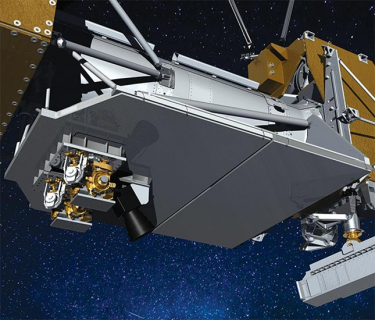
The Laser Communications Relay Demonstration (LCRD) payload is mounted aboard the LCRD Support Assembly Flight (LSAF) spacecraft. The LSAF is equipped with two optical modules, which generate infrared lasers for data transmission to and from Earth.
In 2023, LCRD played a pivotal role as a relay station. The Integrated LCRD Low Earth Orbit (LEO) User Modem and Amplifier Terminal (ILLUMA-T) was delivered to the International Space Station (ISS), where it successfully established a two-way laser communication link. Meanwhile, NASA’s Psyche exploration mission set a record in space communications: during a demonstration, the mission transmitted video data back to Earth from deep space 31 million kilometers away, laying the technical foundation for future crewed missions beyond Earth orbit. The instrument can send and receive near-infrared (NIR) signals, and uses encoded near-infrared lasers to transmit data at a rate of 267 Mbps to the Hale Telescope at the California Institute of Technology’s Palomar Observatory in California.
SpaceX began deploying Laser Communication Terminals (LCTs) in 2022. Its Starlink satellites were originally designed to receive signals from portable ground user terminals and relay them to the next ground station with internet access. With the implementation of inter-satellite laser communication — the direct communication between a satellite and other satellites in the same or adjacent orbital planes — ground stations no longer need to be within the coverage footprint of the same satellite as user terminals. This change is expected to have a transformative impact on the overall operating model of the Starlink constellation.
Major Developers of Laser Communication Terminals
In the past, LCTs were mostly deployed on an experimental basis, with only a handful of systems such as the European Data Relay System (EDRS) used for routine commercial operations. Today, Low Earth Orbit (LEO) constellation operators have begun bulk procurement of LCTs.
TESAT, the market leader, commissioned a new factory in August 2024 with a production capacity of 100 LCT units per month. TESAT states that its terminals have accumulated over 500,000 hours of in-orbit operation, with 10 of its optical communication terminals already deployed in space, making it the only supplier worldwide with mature, proven in-orbit verification experience.
TESAT-Spacecom was founded in 2001 and is headquartered in Backnang near Stuttgart, Germany. The company was restructured from an established satellite payload enterprise and has gradually grown into an industry leader. Its history can be traced back to AEG Telefunken, which was forced to relocate from Berlin in 1949 and subsequently underwent multiple name changes and equity restructurings. In 2001, EADS Astrium (now part of Airbus Defence and Space) acquired TESAT and operated it as an independent company. Today, TESAT employs approximately 1,100 people worldwide, primarily based in Backnang.
In March 2024, Gwynne Shotwell, President and COO of SpaceX, announced that the company had begun selling laser communication terminals to external customers. In September 2024, SpaceX announced the successful testing of laser links between two satellites it built for the U.S. Space Development Agency (SDA), though the test still used TESAT terminals. The test involved two of four satellites equipped with Leidos infrared sensors and TESAT laser terminals.
Meanwhile, other LCT suppliers continue to advance technological evolution. In June 2024, the U.S. Space Systems Command (SSC) announced it had awarded contracts to four companies to develop laser communication terminal prototypes, officially launching the first phase of the $100 million Enterprise Space Terminal program. The winning bidders include Blue Origin, CACI International, General Atomics, and Viasat.
German firm Mynaric previously won an order from Northrop Grumman to become the exclusive supplier of optical communication terminals for the SDA’s Tranche 1 Transport Layer and Tracking Layer program, one of multiple contracts secured by the company. However, due to slower-than-expected progress in LCT production capacity ramp-up, Mynaric’s CEO stepped down in the summer of 2024, and the company’s market capitalization plummeted, even as its production line expansion continues.
Global Progress
Countries around the world have rolled out extensive initiatives in the field of Laser Communication Terminal (LCT) technology.
According to China Daily Website, China successfully sent its first two-way laser communication terminal into orbit in February 2024. The terminal was co-developed by Shenzhen-based HiStarlink and Chengdu-based AdaSpace, with a maximum transmission rate of up to 10 Gbps.
Prior to this, China launched the Micius quantum science satellite in 2016, which realized the world's first satellite-based quantum encrypted communication, establishing a secure link by sending entangled photon pairs to ground stations.
In Japan, NEC has entered into a partnership with California-headquartered Skyloom Global, with the goal of completing LCT research and development by 2025.
European defense contractors have also joined the competition. Thales Alenia Space has carried out R&D on LCTs for quantum communication, while Hensoldt has even extended LCT applications to submarine communications.
Challenges and Innovations in Laser-to-Ground Communications
Laser communications between space and the ground are still regarded as a technically challenging and highly landmark technological breakthrough, as cloud cover, fog, and atmospheric turbulence can degrade transmission capacity at any time. For this reason, such ground stations are most likely to be sited in high-altitude mountains or arid regions, similar to the deployment model of astronomical telescopes, and will leverage image deblurring technologies such as adaptive optics.
French company Cailabs has proposed an alternative approach. The company uses spatial optical field multiplexing/demultiplexing (demux) technology to mitigate the effects of atmospheric turbulence at high data rates. Its proprietary optical system supports multiplexing and demultiplexing of up to 45 modes, with a power capacity of up to 100W per channel. To date, Cailabs has operated multiple ground-based test links with a maximum length of 10 kilometers.
What Lies Ahead
Large-scale satellite constellations are undoubtedly the most promising market for Laser Communication Terminals (LCTs). The Starlink, Kuiper, and China’s Qianfan Constellation programs alone have planned for more than 30,000 satellites. If each satellite is equipped with 2–4 LCTs, annual demand for terminals will reach thousands of units. At present, the biggest bottleneck limiting LCT deployment remains launch capacity. In addition, LEO (Low Earth Orbit) satellites have an average service life of approximately 7 years, which means sustained replacement demand in the market. If the unit price of a single LCT is kept below US$1 million, a rough estimate puts the size of this emerging market at around US$1 billion per year. This estimate is subject to further in-depth analysis.
To date, the largest constellation systems have primarily served end users. Rivada Space Networks, a German-US joint venture, has introduced a new commercial dimension: it plans to deploy 600 satellites to serve a wide range of sectors including maritime, communications, enterprise, energy, and government. While Rivada has yet to launch any satellites, it stated in a November 2024 press release that it has locked in more than US$13 billion in commercial orders for its LEO network.
These markets will further drive the development and deployment of the technology. Starlink’s latest generation of user terminals has demonstrated impressive performance for deployment on vehicles and vessels. Fixed terminals also hold significant opportunities in underdeveloped regions such as Brazil’s Amazon Rainforest and the Australian Outback. Staunch proponents of the Internet of Things (IoT) look forward to realizing high-speed uplinks anytime and anywhere.
Inflight internet access for aircraft will likely require more sophisticated solutions, while government agencies will clearly ensure data link coverage for platforms including fighter jets, rockets, and submarines. This will further advance the development of encryption technologies. The first satellite-based quantum encrypted communications have already been achieved, with more related applications advancing at a rapid pace.
German company MO-SPACE is developing a laser and quantum communication network based on stratospheric airships. This concept offers multiple advantages: airships have lower launch costs and are easier to recover than satellites; they can act as relay nodes between satellites and ground stations; they provide redundancy against space debris risks; and they do not cause impacts to the stratospheric environment in the way satellite re-entry does.
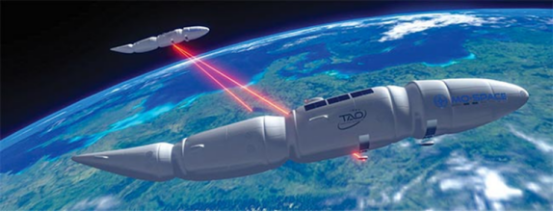
Stationary stratospheric airships can serve as a cost-effective alternative to Low Earth Orbit (LEO) satellites for free-space data transmission.
Compared with satellites, airships can also maintain a relatively stationary position and deliver lower latency, thus circumventing the obstruction caused by cloud cover. Meanwhile, airships can support direct-to-smartphone communications more easily than satellites. While airships may sound like a highly futuristic concept, this approach is rapidly gaining traction. For example, Sceye, headquartered near Albuquerque in New Mexico, USA, is also developing high-altitude airship platforms equipped with LCTs.
The Future Is Here
The concept of Laser Communication Terminals (LCTs) has been discussed for more than 40 years. Today, they have become a reality, with hundreds of systems already ordered by Low Earth Orbit (LEO) constellations. LCTs have reached Technology Readiness Level (TRL) 9. Combined with pricing trends and order scale, it is foreseeable that a LCT hardware market with an annual size of approximately US$1 billion is taking shape.
If this forecast is realized, LCTs will become the communications backbone of global satellite constellations, supporting low-latency internet connectivity. "Internet access anytime, anywhere with just a plate-sized antenna" is only the starting point. Direct-to-smartphone satellite connectivity will follow, and improving GPS positioning accuracy using optical signals will also emerge as a new application direction. New innovations continue to emerge, and rapid technological progress is bringing these creations into everyday life.
 Vietnam Plant + Europe Upgrade: Laser Leader Deepens Global Push
 Three global heavyweights step up their China bets: What's behind the move?
 Big Four laser earnings: Winners, losers, and the ones fighting back
 Photonic chips land ¥1.1B in orders, funds, and financing
 Five Laser Firms See Executive Reshuffles: Younger Leaders Take the Helm
 Laserion: Breaking Ultrafast Laser Bottlenecks to Industrialize Homegrown High-End Sources
 XTRI-tech's Yao Caihong: Building High-End Manufacturing
 Glitterin Tech's Three Photonic Pillars: Building the Optical Backbone of the AI Era
 A Female Pioneer's 20-Year Quest for World-Leading Laser Thin Film Breakthroughs
 HSG Laser's He Hongming: Innovation Drives Laser Manufacturing Future