
Hard X-ray FEL Achieves First Light, Eyes 2027 Completion
source:Jiefang Daily
keywords:
Time:2026-10-27
Source: Jiefang Daily 22nd Oct 2026
The construction of SHINE, a national major science and technology infrastructure project known as the Hard X-ray Free-Electron Laser Facility, has recently achieved a breakthrough. Using electron beams generated by a 4 GeV continuous-wave superconducting linear accelerator to drive 18 four-meter-long undulator lines with a 55 mm magnetic period, the facility successfully achieved first lasing, marking a key step toward completion and operation by the end of 2027.
once completed, SHINE’s accelerator will reach an electron energy of 8 GeV. Its first two undulator lines will produce free-electron laser radiation with photon energies covering 0.2 to 15 keV, pulse lengths as short as femtoseconds, and a maximum repetition rate of up to 1 MHz. only two high-repetition-rate hard X-ray free-electron laser facilities of this type exist worldwide; the other is the High-Energy upgrade of the Linac Coherent Light Source-II (LCLS-II-HE) currently under construction in the United States.

Often described as an ultrafast microscope camera peering into the microscopic world, SHINE combines nanometer-scale resolution to reveal fine microscopic structures with femtosecond-scale shutter speeds to capture ultrafast processes such as chemical bond formation and breaking and molecular flipping, turning fleeting events into continuous “molecular movies.” It will provide cutting-edge research tools for frontier fields including life sciences, quantum materials, and future energy, enabling microstructural analysis and ultrafast dynamics studies.
SHINE will also build the world’s first experimental station based on a 100-petawatt ultra-intense, ultrashort laser, combining ultra-intense lasers with free-electron lasers to provide unprecedented experimental conditions for research in extreme strong-field physics and high-energy-density physics. The construction of SHINE will significantly enhance China’s basic research capacity and original innovation, serving as an important research platform supporting high-level scientific and technological self-reliance and the building of a strong science and technology nation.
SHINE began construction in April 2018. ShanghaiTech University leads the overall construction planning, full-process engineering management, quality and safety management, and subsequent operation and opening, and is mainly responsible for the civil engineering, five experimental stations, and part of the beamlines. The Shanghai Advanced Research Institute of the Chinese Academy of Sciences is mainly responsible for the accelerator, undulators, utilities, and part of the beamlines. The Shanghai Institute of Optics and Fine Mechanics, Chinese Academy of Sciences, is mainly responsible for the construction of the extreme light physics beamline station.
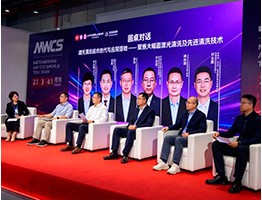 XZQ 2026 Laser Cleaning Summit Debuts at CIIF, Explores Scalable Applications
 Bambu Lab Enters Lasers, Extending from 3D Printing to Desktop Manufacturing
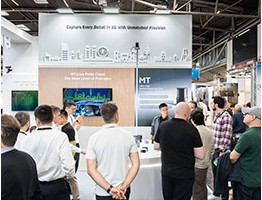 Hesai Inks Two Strategic Partnerships, Unveils MT-Series Lidar
 RMB 6B+ Investment Adds New Player to Jiangsu's Laser Industry Landscape
 Order Frenzy: Laser Earnings Reveal 10B+ Backlogs — Who Wins?
 Kuntai Laser: Full-Stack Solutions for Laser Intelligent Equipment and Manufacturing Upgrades
 Thunder Laser's Chen Biqin: Two Decades of Laser Self-Reliance
 Yang Gaojie, Rationalite Photonics: 3D Optical Computing to Break AI's Compute Wall
 Kingfit's Jin Songqing: Powering the Laser Industry Chain with Advanced Cooling Technology
 Laserion: Breaking Ultrafast Laser Bottlenecks to Industrialize Homegrown High-End Sources