
Kingfit's Jin Songqing: Powering the Laser Industry Chain with Advanced Cooling Technology
source:Laser Manufacture News
keywords:
Time:2026-09-20
Source: Laser Manufacture News 5th Sep 2026
As the laser industry accelerates toward higher power, greater precision, and greener development, the stable operation of lasers depends on high-performance cooling and temperature control systems. Temperature control equipment is no longer a simple auxiliary component—it is now a critical link that directly determines laser processing accuracy, equipment lifespan, and production energy consumption.
As a national-level specialized and innovative "little giant" enterprise, Zhejiang Kingfit Environment Co., Ltd. has been deeply engaged in intelligent temperature control for more than two decades. Leveraging its magnetic levitation core technology and full range of industrial temperature control products, the company has entered the laser sector, providing stable and reliable cooling solutions for 10kW-class and even ultra-high-power laser equipment. Laser Manufacture News recently interviewed Jin Songqing, General Manager of Zhejiang Kingfit Environment Co., Ltd., for an in-depth dialogue on corporate development, technological innovation, strategic planning, and industry collaboration. The interview explores Kingfit's innovative practices in the laser industry and discusses the opportunities and challenges of laser cooling in the high-power era.

Jin Songqing, General Manager of Zhejiang Kingfit Environment Co., Ltd.
Laser Manufacture News: Your company has been deeply engaged in intelligent temperature control and AI environmental systems for over 20 years. Could you briefly introduce your development history and core business layout? Also, what prompted your decision to join the Guangdong Laser Industry Association and collaborate with the laser supply chain?
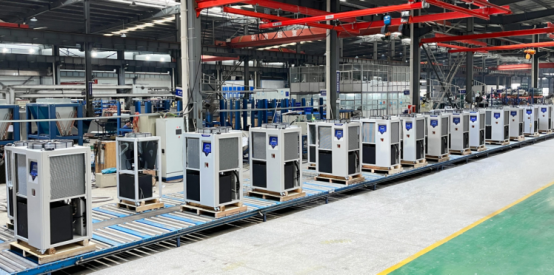
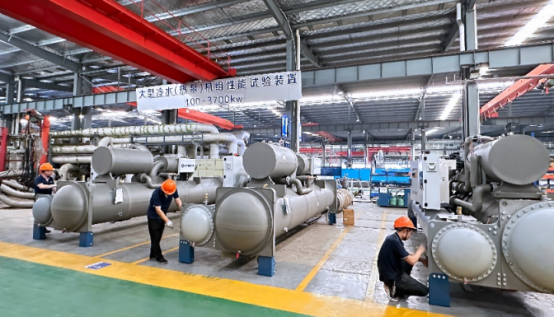
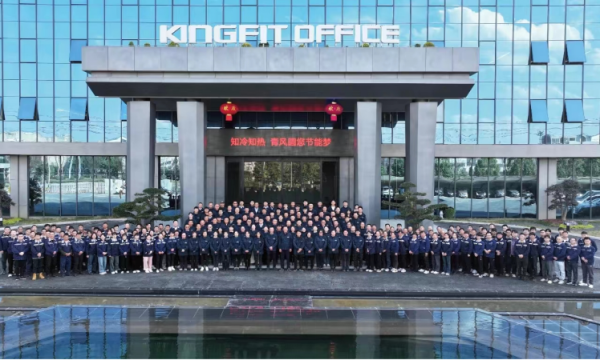
Mr. Jin: Kingfit was founded in 1998 and is headquartered in Lishui, Zhejiang. Starting from industrial and agricultural heating and cooling equipment, we have gradually grown into a national-level specialized and innovative "little giant" enterprise integrating R&D, production, sales, engineering design and installation, and after-sales service. The company currently covers 120 mu (about 8 hectares), with 7 major assembly lines, 3 supporting production lines, and 3 performance test benches, and has an annual production capacity of 180,000 temperature control units. It has 10 subsidiaries and more than 20 service outlets nationwide, with products exported to over 90 countries and regions worldwide.
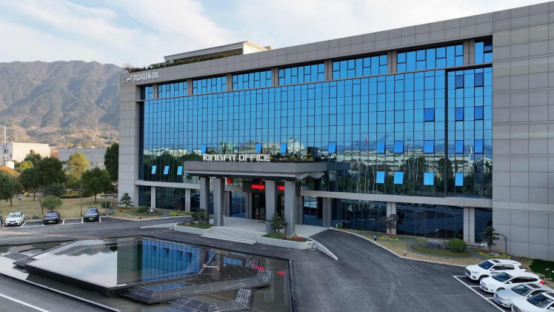
In terms of core technology, the company began researching magnetic levitation technology in 2012 and successfully developed variable-frequency magnetic levitation chillers in 2015, which were launched to market. More than 4,000 magnetic levitation units are now in operation. To date, the company has obtained over 100 intellectual property certificates. We are also a drafting unit for national standards such as Water Chilling (Heat Pump) Packages for Industrial or Commercial and Similar Applications and Oil-Free Magnetic Levitation Centrifugal Water Chilling (Heat Pump) Units.
As for the opportunity to join the Guangdong Laser Industry Association, it was actually a natural progression. In 2023, we officially launched a fiber laser water chiller developed specifically for laser equipment, marking our first entry into the laser industry. This made us realize that the laser industry's demand for high-precision temperature control aligns closely with our nearly 30 years of technological accumulation. The Guangdong Laser Industry Association brings together high-quality companies across the entire laser supply chain. By joining, we hope to leverage the platform to deeply explore the industry's technical pain points and grasp development trends. On the other hand, we also hope to share Kingfit's technological expertise in energy-efficient temperature control with industry peers and jointly drive the upgrading of the laser industry chain's supporting systems.
Laser Manufacture News: Compared with similar brands in the industry, what differentiated technical advantages does Kingfit's chiller offer in terms of temperature control precision, dual-temperature independent control, and all-weather stable operation?
Mr. Jin: In terms of temperature control precision, our fiber laser water chiller uses advanced PID temperature control technology, keeping water temperature fluctuation within ±1°C. For more demanding applications, our magnetic levitation chiller units are equipped with a self-developed integrated control system, achieving temperature control precision of up to ±0.1°C. This precise temperature control is critical for high-precision laser processing—temperature fluctuations directly affect cutting edge quality and dimensional accuracy.
In terms of dual-temperature independent control, our fiber laser water chiller features a "dual-temperature" design, enabling independent and precise temperature control for two circuits in a single unit. The optical components and crystal components of a laser often have different temperature requirements, and dual-temperature independent control can meet the cooling needs of different components separately. This is a targeted design we developed after gaining a deep understanding of how laser equipment works.
In terms of all-weather stable operation, our products feature multiple protection functions, including high/low temperature alarms, high/low pressure alarms, and intelligent anti-freeze protection. The equipment also has built-in RS485 communication, enabling remote monitoring of equipment status, remote operation, and fault diagnosis. We use high-quality brand refrigeration components and premium materials for water tanks, pumps, and piping to enhance corrosion resistance and durability.
Laser Manufacture News: Building on solid technological accumulation, your products enjoy high market recognition. Which core products are currently most favored by laser industry customers? Beyond these, what other temperature control product lines have you developed? What are your overall production capacity, market sales, and market coverage?
Mr. Jin: Currently, our fiber laser water chiller series is the most favored by laser industry customers. This product was tailor-made for the fiber laser industry in 2023, meeting the sector's urgent demand for high-precision, high-efficiency cooling systems. It also incorporates IoT technology for remote centralized control and real-time equipment status monitoring. The product covers cooling needs for fiber laser equipment ranging from 1,500W to 60,000W and above. In addition, our air-cooled modular chillers and water-cooled magnetic levitation chillers are also widely used in laser processing scenarios.
In terms of the overall product line, Kingfit covers a very broad range of temperature control fields, including magnetic levitation centrifugal units, screw chillers, air-source/water-source heat pumps, industrial refrigeration auxiliaries, grain storage air conditioning, and edible fungi air conditioning. Specific product types include oil-free magnetic levitation chillers, modular units, screw chillers, powder cooling units, low-temperature grain storage units, surface treatment specialty units, heat pumps, air-cooled/water-cooled industrial chillers, industrial oil chillers, and laser chillers.
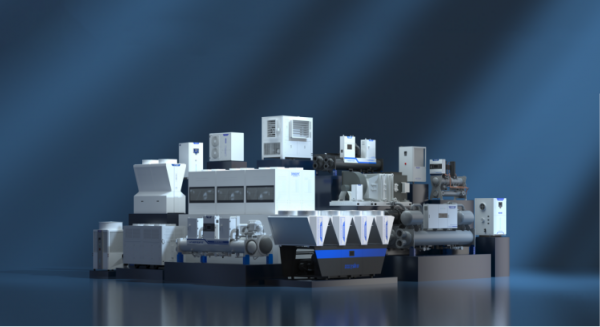
In terms of production capacity, the company has an annual production capacity of 180,000 temperature control units. In 2024, we officially launched a new production line for small standard products, entering the fast track of mass production. The company currently has an annual output value exceeding RMB 500 million, with products exported to more than 90 countries and regions, extending its business influence globally.
Laser Manufacture News: The laser industry is clearly trending toward higher power, with 10kW-class and even ultra-high-power lasers becoming increasingly common. This poses entirely new challenges to cooling systems in terms of load capacity, heat dissipation efficiency, stability, and energy efficiency. What targeted technology iterations and new product R&D upgrades has Kingfit undertaken in response to this high-power trend?
Mr. Jin: Higher power is indeed one of the most prominent trends in the laser industry, and it poses comprehensive challenges to cooling systems. In response, we have focused our technology iterations in the following directions:
First, strengthening cooling and heat dissipation capacity. For high-power fiber lasers, our water chillers leverage water's high specific heat and thermal conductivity to rapidly absorb and transfer the large amounts of heat generated during laser operation, keeping core laser components at a stable operating temperature. We use high-quality refrigeration components and variable-speed fans to improve heat dissipation efficiency while reducing energy consumption.
Second, deepening the application of magnetic levitation technology. Our magnetic levitation chiller units use high-speed permanent magnet variable-frequency technology combined with a unique horizontally opposed two-stage compression structure, achieving energy savings of up to 50%. The oil-free operation of magnetic levitation technology also significantly reduces maintenance costs, making it particularly suitable for scenarios where high-power laser equipment runs continuously for extended periods.
Third, iterating intelligent control systems. Our laser cutting machine chillers use advanced intelligent temperature control technology that automatically adjusts cooling power based on the laser's actual operating status, ensuring both cooling effectiveness and efficient energy use.
Fourth, strengthening custom development capabilities. We can customize products based on customer needs, ensuring that cooling water flow and cooling capacity precisely match the laser's operating requirements. We are also continuing to develop laser cooling solutions with greater cooling capacity and higher precision to meet the needs of future higher-power laser equipment.
Laser Manufacture News: Many small and medium-sized laser processing companies focus only on the initial purchase price when selecting cooling equipment, ignoring long-term hidden costs such as energy consumption, maintenance, and equipment wear. How do you view this industry situation? How does Kingfit help customers achieve comprehensive cost reduction?
Mr. Jin: This is indeed a common phenomenon in the industry, and I fully understand the choices SMEs make under cost pressure. But in the long run, focusing only on the initial purchase price often means being "penny wise and pound foolish."
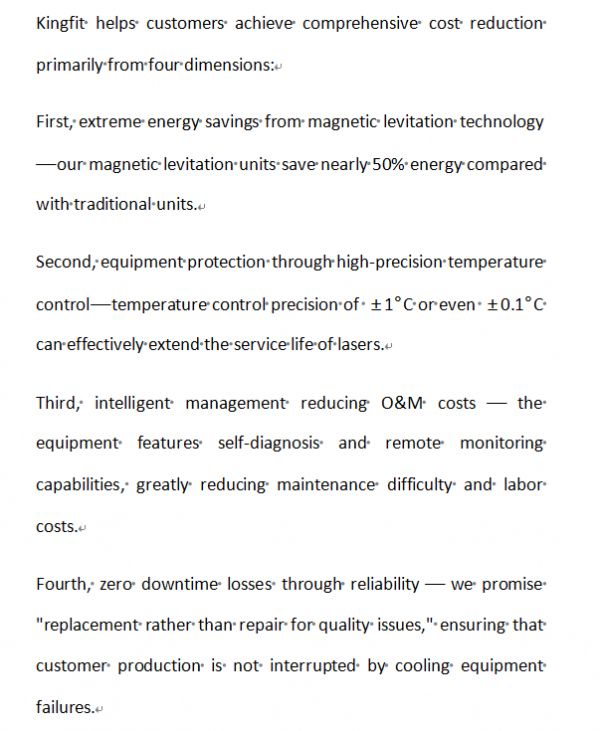
We often walk customers through the math: the purchase cost of a chiller may account for only about 20% of the total lifecycle cost of the equipment, while energy costs, maintenance costs, and equipment wear and product defect rates caused by unstable temperature control—these hidden costs are the real bulk. Take our magnetic levitation chiller as an example: it saves nearly 50% energy compared with traditional screw chillers, directly halving electricity bills. For a chiller paired with a high-power laser, the electricity savings in a single year may offset the initial purchase price difference.
Laser Manufacture News: Kingfit's temperature control equipment is widely used in laser processing, high-end manufacturing, and many other fields. Could you share one or two representative application cases? What tangible improvements in production precision, stability, energy costs, and equipment lifespan did customers achieve by adopting your intelligent temperature control solutions?
Mr. Jin: Let me share two representative cases:
Case 1: A large sheet metal processing company. The company had long suffered from frequent laser equipment alarms and shutdowns during high-temperature summer periods, seriously affecting production schedules. After adopting Kingfit's laser cutting machine chiller, it not only completely resolved the recurring equipment alarms during high-temperature periods but also extended the laser's service life by 40%. In terms of energy consumption, automatic load adjustment through variable-frequency technology reduced energy use by more than 30% compared with the original equipment.
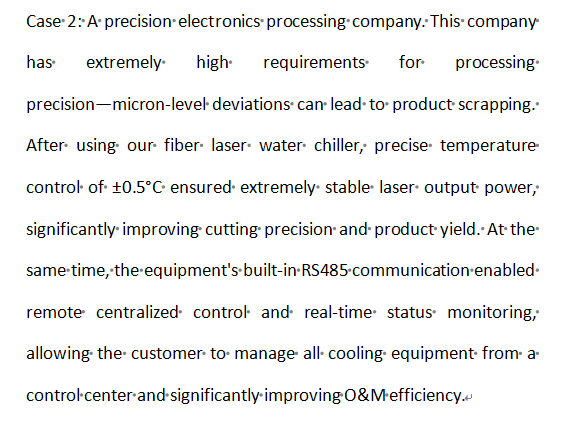
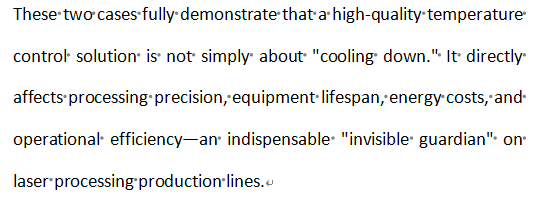
Laser Manufacture News: Looking ahead to the laser industry's trends toward intelligence, higher power, and green energy efficiency, what targeted upgrade plans and layouts does your company have in technology R&D, product iteration, scenario adaptation, and after-sales service?
Mr. Jin: Looking to the future, we have plans in the following areas:
Technology R&D: We will continue to increase R&D investment, with the company investing more than RMB 10 million annually in project technology R&D. Key directions include further improving the energy efficiency ratio of magnetic levitation technology, developing cooling solutions for higher-power laser equipment, and continuously optimizing intelligent control algorithms. We have already established research platforms including a provincial key enterprise research institute and a provincial postdoctoral workstation, and will continue to bring in top talent.
Product iteration: We will continue to enrich our product line around the needs of the laser industry. From low- and medium-power fiber laser water chillers to high-power magnetic levitation chiller units, we will form a complete product matrix. We will also continue to drive intelligent upgrades of our products, moving temperature control equipment from "passive cooling" to "active intelligent control."
Scenario adaptation: Laser application scenarios are becoming increasingly diverse—from traditional cutting and marking to emerging fields such as new energy battery welding, photovoltaic processing, and 3D printing. Each scenario has different temperature control requirements. We will go deep into each segmented scenario to provide customized temperature control solutions.
After-sales service: We have already established more than 20 service outlets nationwide. In the future, we will further use IoT+ technology to monitor equipment in real time, enabling remote early warning, diagnosis, and solution proposals. Our goal is to achieve "preventive maintenance"—helping customers eliminate hidden risks before they even discover a problem.
Laser Manufacture News: As a member of the Guangdong Laser Industry Association, what cooperation goals and development expectations does your company hope to achieve through the association's platform in terms of resource matching, technical exchange, and market cooperation?
Mr. Jin: As a member of the association, we are full of expectations. Specifically, there are three areas:
In terms of resource matching, we hope to use the association's platform to establish cooperation with more laser equipment manufacturers and system integrators. Kingfit has nearly 30 years of technological accumulation in temperature control, and we have both the capability and the willingness to become a reliable "temperature guardian" in the laser industry chain. We hope that through the association's facilitation, more laser companies will get to know and trust Kingfit.
In terms of technical exchange, there is still much room for exploration in the intersection and integration of laser technology and temperature control technology. We look forward to in-depth exchanges with industry experts through technical forums, seminars, and other activities organized by the association, jointly discussing frontier topics such as high-power laser cooling and intelligent temperature control.
In terms of market cooperation, the association brings together many outstanding companies across the laser industry chain, and we hope to find more cooperation opportunities there—whether in joint R&D, supporting supply, or jointly exploring overseas markets.
Kingfit will always adhere to its technology roadmap of "energy conservation and environmental protection, technological innovation, and process upgrading," contributing Kingfit's strength to the high-quality development of the laser industry with more energy-efficient and intelligent temperature control solutions. We also look forward to walking hand in hand with fellow members in the association's big family and achieving a win-win future together.
 Vietnam Plant + Europe Upgrade: Laser Leader Deepens Global Push
 Three global heavyweights step up their China bets: What's behind the move?
 Big Four laser earnings: Winners, losers, and the ones fighting back
 Photonic chips land ¥1.1B in orders, funds, and financing
 Five Laser Firms See Executive Reshuffles: Younger Leaders Take the Helm
 Yang Gaojie, Rationalite Photonics: 3D Optical Computing to Break AI's Compute Wall
 Kingfit's Jin Songqing: Powering the Laser Industry Chain with Advanced Cooling Technology
 Laserion: Breaking Ultrafast Laser Bottlenecks to Industrialize Homegrown High-End Sources
 XTRI-tech's Yao Caihong: Building High-End Manufacturing
 Glitterin Tech's Three Photonic Pillars: Building the Optical Backbone of the AI Era