
Kuntai Laser: Full-Stack Solutions for Laser Intelligent Equipment and Manufacturing Upgrades
source:Laser Manufacture News
keywords:
Time:2026-10-26
Source: Laser Manufacture News 16th Sep 2026
From a six-person startup to a national-level specialized and innovative
”little giant” with nearly 80 authorized patents, Jiangsu Kuntai Industrial Equipment Co., Ltd. (Kuntai Laser) has spent nearly two decades carving out a path for domestic laser intelligent equipment.
Facing early dominance by foreign brands in high-end laser equipment, Kuntai Laser built its approach on a simple logic: master the process and refine the product. Starting with pneumatic marking machines, the company gradually built four major product lines covering intelligent marking, high-efficiency welding, green cleaning, precision cutting, and non-standard automation integration. It has also made forward-looking bets on AI vision integration and ultrafast lasers.
Today, Kuntai Laser’s products serve leading companies such as Sinotruk, Bosch, and China National Nuclear Corporation, and are exported to more than 150 countries. The groundbreaking of its new industrial park and the rollout of its “Light · Intelligent Connectivity” strategy mark a broader shift from selling equipment to selling solutions, as the company empowers the intelligent upgrade of manufacturing with full-stack product solutions.
In the opening year of the 15th Five-Year Plan, the Kuntai Laser Intelligent Equipment Industrial Park has officially broken ground, and the “Light · Intelligent Connectivity” strategy is moving into deeper implementation. Ultrafast lasers and smart cloud platforms have become key priorities for the next stage. In a recent interview with Laser Manufacture News, Ms. Hu Yi, General Manager of Jiangsu Kuntai Industrial Equipment Co., Ltd., shared her thinking and practice as a veteran of more than two decades in the industry, offering insights into how domestic laser equipment is entering a new phase of global output.

Laser Manufacture News: Ms. Hu, hello. Jiangsu Kuntai Industrial Equipment Co., Ltd. was founded in 2007 and has been operating for nearly two decades. It has grown from a six-person team into a national high-tech enterprise and a Jiangsu specialized and innovative enterprise with more than 60 employees and nearly 80 authorized patents. What was the opportunity that led you to choose the laser equipment track? And what was the biggest challenge in the early days of the business?
Ms. Hu: Hello everyone. I am very pleased to be interviewed by Laser Manufacture News. Since the 1990s, I have worked on the front lines with various types of automated processing equipment and witnessed the rapid growth of China’s manufacturing industry. Around 2007, foreign brands held a near monopoly on high-end laser equipment, with high prices and long service cycles. Domestic manufacturers generally faced a dilemma: they could afford to buy the equipment, but could not afford to operate or repair it. At the same time, I saw that demand for laser processing in China was taking off, that there was huge room for domestic substitution, and that the country lacked local laser equipment service providers who truly understood processes and integration. That was the opportunity that led me to found Kuntai Laser.
Conditions in the early days were very tough. We had only six people, limited capital, and weak technical capabilities. The biggest challenges came from two sides. The first was technical barriers. Core optical paths and control algorithms were mostly held by foreign companies, and we had no ready-made solutions to follow, so we could only learn through repeated trial and error. The second was market trust. Customers trusted imported brands more, and it was extremely difficult for a startup private company to prove its reliability. At that time, I handled marketing, R&D, and management all at once. I was out calling on customers, traveling overseas to connect with technical resources, and spending time in the workshop following up on debugging. We chose to start with pneumatic marking machines and gradually expand into laser marking, seeking a balance between surviving and building internal strength. We insisted on refining products based on customers’ real operating conditions and built market reputation step by step.
Laser Manufacture News: From pneumatic marking machines in the early days to today’s full range of laser marking, welding, cleaning, and cutting products, as well as non-standard automated production line integration, what key strategic turning points has Kuntai gone through?
Ms. Hu: There have been three main turning points. The first came around 2010, when we shifted fully from pneumatic marking to laser marking. We anticipated that the quality advantages of laser marking would define the future direction, and events proved that judgment correct.
The second was in 2018, when we achieved batch production of laser cleaning equipment and became one of the earliest players in China to enter this field. This came from our forward-looking assessment of the “dual carbon” trend. Laser cleaning uses no chemical agents and generates no waste, making it a truly green process.
The third was our transformation from a single equipment manufacturer into a service provider built on two main lines: high-end laser equipment and customized automation solutions. We found that what customers really needed was a complete solution to their production pain points. So we formed a non-standard automation team and integrated various laser devices with conveyor lines, robotic arms, and inspection fixtures. This allowed us to upgrade from selling equipment to selling solutions and to establish a firm foothold in the non-standard segment. The underlying logic behind our steady growth over these two decades has been not chasing trends or blindly expanding capacity. We are guided by customers’ process pain points, and we master the process first before bringing products to market.
Laser Manufacture News: Kuntai Laser currently offers four major product lines: intelligent marking, welding, cleaning, precision cutting, and non-standard integration. What are their market positioning and core advantages?
Ms. Hu: The four product lines are independent but can also be combined synergistically to form complete automated production lines.
First, the intelligent laser marking series. It is positioned for high-precision marking on complex workpieces and irregular curved surfaces. Its advantage lies in self-developed vision positioning and 3D dynamic focusing technology, which enables precise marking on irregular workpieces. Color marking meets high-end traceability requirements and is widely used in precision electronics, auto parts, and other fields.
Second, the full range of high-efficiency laser welding. It covers benchtop precision systems, air-cooled handheld units, and robot-linked workstations, respectively suited to small parts, sheet metal repair, and large production lines. The core advantage is a deep process library. We have built up extensive process know-how for industries such as new energy, hardware, and medical devices, and our systems can be seamlessly integrated into customers’ existing production setups.
Third, green laser cleaning equipment. It is positioned to replace high-pollution processes such as sandblasting and chemical cleaning. Its advantages are non-contact operation, no consumables, and no environmental pollution. It is suitable for shipbuilding, rail transit, mold repair, and other scenarios, and aligns with the dual carbon direction.
Fourth, laser precision cutting and non-standard automation integration systems. This is our most differentiated segment. In addition to precision standalone machines, our core capability is non-standard customization. We can deliver digital production lines that integrate multiple processes in a one-stop manner. We are good at solving customized, complex production line challenges, and this is also the key to entering the supply chains of many leading companies.
Laser Manufacture News: In combining AI vision grabbing with laser marking, Kuntai has solved the industry pain point of batch printing on irregular workpieces. Could you share the process behind this technological breakthrough and the outlook for AI integration?
Ms. Hu: Customers often face pain points such as irregular workpiece shapes, disordered incoming materials, high costs for manual fixtures, and long changeover and commissioning times. Traditional machine vision has insufficient recognition stability when dealing with reflective surfaces, irregular shapes, and mixed materials.
To address this, we use external cameras to capture feature points in real time, and coordinate motion control with the laser system to achieve automatic marking. This involves precise coordination among vision algorithms, motion control, and laser timing. Ultimately, we achieved automatic recognition, positioning, and batch marking of disordered incoming materials, greatly reducing changeover and commissioning time.
The integration of AI and laser processing is an inevitable trend. In the future, AI will enable intelligent workpiece recognition, automatic parameter matching, defect detection, and fault prediction, lowering the process threshold and supporting unmanned production. However, AI needs to be fed large amounts of real process data, and deep process know-how remains the foundation.
Laser Manufacture News: Kuntai achieved industrialization of laser cleaning back in 2018. How do you view its market prospects, and what is your deployment strategy?
Ms. Hu: Traditional cleaning faces pain points such as chemical pollution, substrate damage, and high costs. Against the backdrop of dual carbon goals, laser cleaning, which emits no wastewater or waste, is bound to become a necessity, and the prospects are extremely promising. Our strategy can be summarized as “two deep cultivations.” First, deep cultivation of application scenarios. We develop dedicated models based on the power and portability requirements of different scenarios such as shipbuilding, cultural relics, rail transit, and aviation. Second, deep cultivation of technology iteration. From handheld units to automated integration, and from flat surfaces to curved-surface adaptation, we continue to improve power stability and intelligent control. In the future, we will launch lighter and smarter equipment, helping laser cleaning move from a niche process to a widely used tool.
Laser Manufacture News: Your products have entered the supply chains of leading companies such as Sinotruk, Bosch, and China National Nuclear Corporation, and are exported to more than 150 countries. What is unique about Kuntai’s quality control, process validation, and service?
Ms. Hu: We have a mature methodology. On quality control, we strictly implement the ISO9001 system. Before leaving the factory, every machine must undergo multiple rounds of long-duration simulated working-condition testing to eliminate hidden risks. On process validation, when we receive a customer requirement, we first take in the workpiece, complete full validation in our sample room, and issue a report. Production begins only after the results are confirmed to meet standards. For high-reliability industries such as nuclear power and automotive, we cooperate on long-duration on-site working-condition testing.
On customer service, we have built a rapid-response team in China. Overseas, we rely on our U.S. subsidiary and localized networks to provide full-lifecycle service, from early process consulting and mid-stage installation and commissioning to later remote operation and maintenance. In addition, we insist on deeply understanding the customer’s industry and customizing solutions based on pain points, so as to meet stringent supply chain requirements.
Laser Manufacture News: In June 2026, the Kuntai Laser Intelligent Equipment Industrial Park broke ground. What does this mean for the company, and what tangible improvements will it bring?
Ms. Hu: The groundbreaking is an important milestone. As orders for large non-standard integrated production lines increase, our existing plant can no longer keep up with demand.
The new park will bring three major improvements. First, capacity upgrading. New modern factory buildings will expand our assembly lines, especially the assembly and commissioning space for large custom production lines, which will effectively shorten delivery cycles. Second, R&D upgrading. We will expand the laboratories at our technology center, build comprehensive testing platforms for optics, ultrafast lasers, and AI vision, and attract top talent. Third, a strategic upgrade. It will move us from product leadership toward system-level capability leadership and turn the park into an industrial ecosystem hub integrating R&D, process validation, and customer experience.
Laser Manufacture News: The company plans to move into picosecond and femtosecond ultrafast lasers and enter ultra-precision micromachining fields such as semiconductors. What is the current R&D progress, and what are your plans for domestic substitution?
Ms. Hu: Ultrafast lasers represent a high ground in high-end equipment, and we have made them a key priority. Our team has completed preliminary process research, optical path validation, and experimental platform setup, and has carried out sample validation in selected micromachining scenarios. Ultrafast equipment is extremely difficult, involving a complete system of precision optical paths, motion control, and a micromachining database. We are not aiming for overnight success. Instead, we are starting with the micromachining of specific components, refining processes, and iterating complete machines.
Laser Manufacture News: Kuntai has proposed the “Light · Intelligent Connectivity” strategy and is building a “Smart Light Cloud” system. Could you explain what this means and what the ultimate form will look like?
Ms. Hu: The core of “Light · Intelligent Connectivity” is interconnectivity, intelligence, and empowerment. Interconnectivity means turning equipment into network nodes. We have already achieved cloud storage of operating data, allowing customers to check equipment status and energy consumption in real time. Intelligence means using cloud-based AI algorithms for fault warnings and remote debugging. Empowerment means using data iteration to optimize the process library, so new customers can use optimal parameters out of the box. The ultimate form is not just an operations and maintenance tool, but a laser processing industrial internet platform that integrates equipment monitoring, process management, predictive maintenance, and a knowledge base. It will connect with customers’ MES systems and provide manufacturers with lightweight digital tools.
Ms. Hu: China’s laser industry has moved beyond the imitation and catch-up stage. Capabilities in light sources, complete machines, and integration have improved significantly, and the industry is entering a new stage where import substitution and global output proceed in parallel. That said, we still lag behind the international frontier in ultrafast lasers and some high-end core components.
There are five main growth engines going forward. First, the new energy track, with strong demand for welding, cleaning, and marking across upstream and downstream segments. Second, green manufacturing, as laser cleaning continues to penetrate more applications. Third, precision micromachining, where semiconductors and medical devices are driving demand for ultrafast lasers. Fourth, automation integration and digitalization, as customers increasingly prefer full-line solutions. Fifth, overseas markets, where there is huge room for Chinese equipment with strong cost-performance.

Ms. Hu: Price wars damage the industry ecosystem, and customers are increasingly valuing process capability and long-term service. Kuntai’s differentiation lies in four areas. First, we avoid low-end homogeneous competition and focus on non-standard automation integration, providing one-stop solutions. Second, we stay process-driven and build up an industry database. Third, we invest in AI and cloud platforms to give equipment digital added value. Fourth, we continue to accumulate proprietary technology and build a patent portfolio. For small and medium-sized laser companies, my advice is not to pursue breadth for its own sake. Find a niche track, go deep in specific scenarios, and build unique process barriers. At the same time, understand customer pain points thoroughly and aim to be a “small but beautiful, specialized and refined” company. Being specialized and innovative is not just a policy direction; it is a realistic survival path for SMEs.
Laser Manufacture News: As a female entrepreneur with more than two decades in the industry, how do you see the role of women in high-end manufacturing, and what lessons do you have for female entrepreneurs?
Ms. Hu: High-aend manufacturing has long been perceived as a male-dominated field, but I have always believed that craftsmanship knows no gender. Women in manufacturing tend to be better at discerning subtle needs and controlling details, and they have unique strengths in team empathy and refined operations. More and more outstanding women are making their mark in high-end manufacturing.
For female entrepreneurs, I have a few reflections. First, there are no shortcuts in manufacturing. Be prepared for long-term hard work and dedicate yourself to mastering technology. Second, do not let the label that “manufacturing is not suitable for women” hold you back. Capability is what matters. Third, value team building. Going it alone will not take you far. Fourth, stay committed to long-termism and quality. Seeing domestic equipment enter major leading companies and sell overseas brings a sense of achievement that nothing else can replace. I hope more women will enter the industrial sector and realize their own value.
 XZQ 2026 Laser Cleaning Summit Debuts at CIIF, Explores Scalable Applications
 Bambu Lab Enters Lasers, Extending from 3D Printing to Desktop Manufacturing
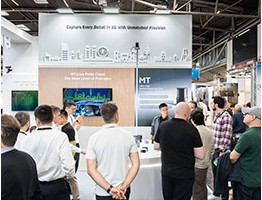 Hesai Inks Two Strategic Partnerships, Unveils MT-Series Lidar
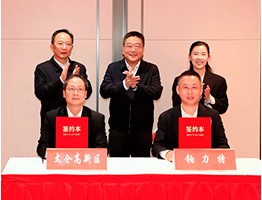 RMB 6B+ Investment Adds New Player to Jiangsu's Laser Industry Landscape
 Order Frenzy: Laser Earnings Reveal 10B+ Backlogs — Who Wins?
 Kuntai Laser: Full-Stack Solutions for Laser Intelligent Equipment and Manufacturing Upgrades
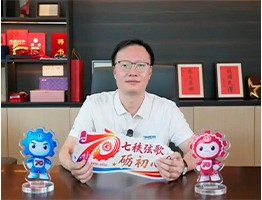 Thunder Laser's Chen Biqin: Two Decades of Laser Self-Reliance
 Yang Gaojie, Rationalite Photonics: 3D Optical Computing to Break AI's Compute Wall
 Kingfit's Jin Songqing: Powering the Laser Industry Chain with Advanced Cooling Technology
 Laserion: Breaking Ultrafast Laser Bottlenecks to Industrialize Homegrown High-End Sources