
Order Frenzy: Laser Earnings Reveal 10B+ Backlogs — Who Wins?
source:Laserfair.com
keywords:
Time:2026-09-20
Source: Laserfair.com 9th Sep 2026
In the first half of 2026, China's laser industry enjoyed a rare "order feast."
Recently disclosed half-year reports from 30 listed companies across the laser supply chain show that during the reporting period, new orders and order backlogs at leading laser equipment makers surged across the board: Han's Laser signed new orders worth about RMB 16 billion, Hymson's order backlog approached RMB 17 billion, UW Laser signed new orders of RMB 4.2 billion, and Lyric Robot's backlog exceeded RMB 5 billion..

Driven by a recovery in new energy sectors such as power batteries and energy storage batteries, combined with the explosion in AI computing infrastructure, laser equipment makers are not only seeing orders surge but also launching a wave of capacity expansion. Many laser companies have moved to lease plants, build bases, and ramp up hiring to match the surge in order demand.
01. Billion-Yuan Backlogs: The Order "Arms Race" Among Leading Players
A review of half-year reports from 30 listed laser companies shows that in the first half of 2026, many laser makers saw their order books filled to the brim, with AI computing and new energy sectors emerging as key engines of order growth.
Han's Laser's half-year report shows revenue of RMB 13.413 billion, up 76.19% year on year. More notably, on the order side, the report shows that as of the end of 2025, the company had about RMB 8.9 billion in undelivered orders; in the first half of 2026, it signed new orders worth about RMB 16 billion, more than doubling year on year. In just six months, the value of newly signed contracts approached the scale of its full-year 2025 revenue.
Hymson's order figures are equally striking. The company signed nearly RMB 5 billion in new orders in the first quarter of 2026, up about 80% year on year; by the end of the first quarter, its backlog approached RMB 16 billion. With continued order intake in the second quarter, the market estimates its first-half backlog has reached about RMB 17 billion.
UW Laser signed RMB 4.2 billion in new orders in the first half (tax included), up 91% year on year, with lithium battery orders (including power and energy storage) accounting for over 80%. Lyric Robot's backlog exceeded RMB 5 billion as of the end of June, with lithium battery accounting for about 80%.

Analysts believe the jump in order scale reflects a concentrated release of downstream sector momentum—AI computing infrastructure construction has generated massive demand for high-end PCB equipment, while energy storage battery expansion has driven a surge in lithium battery equipment orders.
That said, the disparity in order scale also reveals a fact: orders in the laser industry are concentrating toward the top, and the gap in order-winning capability between platform-based companies and smaller players is widening.
02. Where Are the Orders Coming From? The "Dual-Engine" of AI Computing and New Energy
Breaking down the composition of these billion-yuan orders at major laser companies, two main threads are clearly visible.
The first is the AI computing infrastructure boom. Han's Laser, for example, posted RMB 4.985 billion in PCB intelligent manufacturing equipment revenue in the first half, up 109.29% year on year. The continued expansion of AI servers is driving PCBs toward higher layer counts and higher density. Its subsidiary Han's CNC reported first-half revenue of RMB 4.985 billion, with net profit surging 263.45% year on year, confirming the pull-through effect of AI computing on PCB equipment.
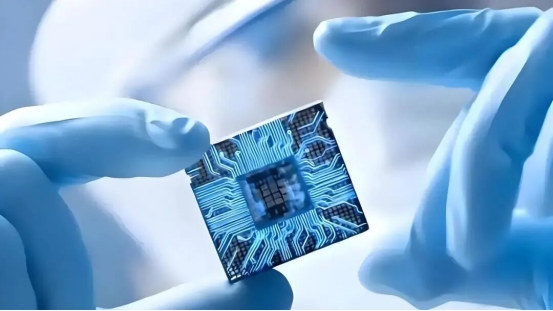
The second thread is the recovery of the new energy industry. Of UW Laser's RMB 4.2 billion in new orders, over 80% came from the lithium battery sector, with energy storage battery orders growing notably faster than power battery orders. Hymson's lithium battery laser and automation equipment contributed RMB 1.739 billion in revenue, accounting for 56.58% of total revenue, while its consumer electronics business grew 91.1% year on year. Lyric Robot's lithium battery manufacturing equipment revenue reached RMB 1.446 billion, or 73.8% of total revenue.
Orders in the optical communications sector are also benefiting from the spillover of AI computing. YOFC's first-half net profit attributable to the parent reached RMB 2.925 billion, nearly nine times higher year on year, with its optical transmission product gross margin soaring to 53.36%. Optical component makers such as AFR Laser and Shijia Photons both posted revenue growth exceeding 50%, with order lead times generally lengthening.
03. Capacity Crunch Looms: Expansion Becomes a "Collective Move"
Faced with a flood of orders, laser giants are not content to rely on existing capacity. They are launching expansion plans and accelerating global deployment to consolidate their market positions.
UW Laser, for example, revealed in its half-year report that its capacity utilization rate is nearing saturation due to a full order backlog. In response, the company not only leased tens of thousands of square meters of additional production space but also added 1,126 employees by the end of the reporting period compared with the start of the year to meet growing delivery demand.
DR Laser broke ground in Wuhan on a pan-semiconductor laser processing base with a total investment of RMB 3 billion. Focuslight Technologies proposed a RMB 1.021 billion private placement to fund capacity building for core optical components used in high-end optical interconnects. Raycus Laser is also accelerating capacity construction, with its new light source R&D and production base in Wuhan Optics Valley now fully under construction...
Notably, global expansion has become another strategic priority for laser companies.

UW Laser plans to invest in establishing a subsidiary in Spain to further improve its European market layout. Han's CNC has launched a new phase of global operations by investing in a production base in Malaysia, extending its reach across Southeast Asia and global markets. YIFI Laser has successfully exported its domestic full-tab core equipment to leading overseas customers through subsidiaries in Singapore, Hong Kong, and South Korea. HGTECH's overseas business revenue grew 116% year on year, highlighting the notable results of its internationalization strategy...
However, a word of caution: these laser equipment manufacturers face a construction cycle of 12 months or even longer from expansion to capacity release. When this concentrated wave of new capacity comes online just as demand growth may be slowing, the risk of supply-demand mismatch should not be overlooked.
 Order Frenzy: Laser Earnings Reveal 10B+ Backlogs — Who Wins?
 AI Compute Land Grab: What 30 Laser Earnings Reports Reveal
 Action-Cam Pioneer's Optical Pivot? GoPro to Sell Itself to Optics Firm for $285M
 Wuhan Team "Grows"Next-Gen Photovoltaic Film to Let Solar Panels Harvest More Sunlight
 Vietnam Plant + Europe Upgrade: Laser Leader Deepens Global Push
 Yang Gaojie, Rationalite Photonics: 3D Optical Computing to Break AI's Compute Wall
 Kingfit's Jin Songqing: Powering the Laser Industry Chain with Advanced Cooling Technology
 Laserion: Breaking Ultrafast Laser Bottlenecks to Industrialize Homegrown High-End Sources
 XTRI-tech's Yao Caihong: Building High-End Manufacturing
 Glitterin Tech's Three Photonic Pillars: Building the Optical Backbone of the AI Era