
BYD Backs Shenzhen Lidar's New RMB 10B Hidden Champion
source:elecfans.com
keywords:
Time:2026-10-27
Source: elecfans.com 10th Oct 2026
Just ahead of the National Day holiday, another Shenzhen sensor company successfully listed in Hong Kong.
On September 30, Shenzhen Camsense Technologies Co., Ltd. officially began trading on the Main Board of the Hong Kong Stock Exchange. Its product portfolio includes triangulation lidar, dToF lidar, and line laser sensors. Since its founding, cumulative product shipments have exceeded 39 million units. In 2025, total shipments of its lidar and line laser sensors exceeded 10 million and 5 million units, respectively, with wide applications in robot vacuums, XR interaction, industrial automation, and other fields.
Specifically, Camsense's lidar technology framework is built on a foundation of ultra-precise spatial perception algorithms, enabling comprehensive processing from infrared light handling to point cloud spot analysis. The technology stack mainly includes in-house spatial data processing chip design, comprehensive software development for spatial perception solutions, vertical-cavity surface-emitting laser (VCSEL) system design, and intelligent manufacturing technology. Through the synergy and integration of these four core technologies, and leveraging dToF and structured light solutions, the company can achieve 3D perception with millimeter- and sub-millimeter-level near-field measurement accuracy.
From a product perspective, Camsense's triangulation lidar primarily uses geometric measurement to calculate short-range distances. Its perception range is approximately 0.15 to 8.0 meters, with millimeter-level accuracy, and the technology is mainly used for navigation and mapping. Because the module is relatively large but cost-effective, triangulation lidar serves as a standardized solution that can be integrated into standard-sized robot vacuum platforms to build basic floor maps and enable reliable indoor navigation.
dToF lidar, by contrast, operates by measuring the exact time it takes for a light pulse to reflect back from an object. This technology can achieve an extended perception range of approximately 0.1 to 12.0 meters while maintaining millimeter-level accuracy. dToF lidar features a compact module size, offering greater design flexibility, making it particularly suitable for integration into compact and high-end robot vacuum models. In addition, its strong resistance to intense light interference enables devices to map larger areas more quickly and ensures highly accurate navigation in complex environments.
Line laser sensors are Camsense's complementary solution for close-range 3D vision, working in coordination with lidar, which is mainly used for mapping. The technology captures the detailed shape of objects directly in front of the device by projecting laser lines. Line laser sensors are often deployed in highly compact modules and serve two main functions: forward obstacle avoidance, operating within a perception range of approximately 3.0 to 30.0 centimeters, and wall-following, operating within a perception range of approximately 1.5 to 10.0 centimeters. Both functions achieve sub-millimeter accuracy, providing robot vacuums with the enhanced precision needed to avoid small obstacles such as wires or shoes and to perform precise edge-cleaning operations.
In addition to the above, Camsense has also independently developed sub-millimeter AI spatial data processing chip designs and core spatial perception AI algorithms, making it one of the very few companies in the industry with capabilities across the relevant supply chain technologies.
In terms of revenue, Camsense's revenue reached approximately RMB 332 million, RMB 433 million, and RMB 614 million in 2023, 2024, and 2025, respectively, with gross margins of 21.5%, 16.3%, and 16.5%. As of March 31, 2026, Camsense's first-quarter revenue alone reached approximately RMB 196 million, and its gross margin climbed sharply to 19.2%.
The fluctuations in gross margin were mainly due to a combination of factors: new dToF and line laser products were still in the capacity ramp-up phase with insufficient efficiency, while triangulation products adopted competitive pricing to capture market share; gross margin improved after the D3 series of improved products ramped up. In the future, as new products mature and economies of scale are released, product gross margins are expected to continue improving.
From 2023 to 2025, benefiting from the rapid growth in downstream demand from the robot vacuum market, shipments of its triangulation lidar increased year by year, reaching 4.76 million, 7.85 million, and 9.31 million units, respectively, with corresponding revenue of approximately RMB 327 million, RMB 408 million, and RMB 403 million. However, driven by significant improvements in scale and production efficiency, the unit price of its triangulation lidar declined year by year: RMB 68.6 in 2023, falling to RMB 51.9 in 2024, further decreasing to RMB 43.3 in 2025, and dropping to as low as RMB 40.4 in the first quarter of 2026.
dToF lidar is a product line that Camsense only officially commercialized in the second half of 2024. In 2024, its dToF lidar shipments reached 52,300 units; in 2025, shipments doubled to 1.156 million units; and in the first quarter of 2026, shipments reached as high as 1.257 million units, mainly driven by increased shipments of P-series products. In terms of unit price, the average selling price of its dToF lidar products was as high as RMB 80.3 in 2024, fell sharply to RMB 56.2 in 2025, and further declined to RMB 43.5 in the first quarter of 2026.
Line laser sensors are a product line launched by Camsense in the first half of 2024. Shipments reached approximately 752,000 units in 2024 and soared to 5.658 million units in 2025. In the first three months of 2026 alone, shipments reached 2.008 million units, mainly due to downstream customer demand and sharply increased sales of new series products. In terms of unit price, the price per unit of its line laser sensors was RMB 25.7 in 2024, further declining to RMB 23.6 in 2025 and RMB 22.5 in the first quarter of 2026, mainly benefiting from improved production efficiency and downstream economies of scale.
In terms of shareholder structure, Camsense was co-founded by Wang Jian and Zhou Kun. Wang Jian, as chairman, directly holds approximately 12.52% of the shares, holds approximately 3.10% through controlled entity "Huancuang Investment," and approximately 1.48% through "Xinle Management." Zhou Kun serves as general manager and directly holds approximately 10.31%, and holds approximately 1.92% through controlled entity "Huancuang Times." Wang Jian, Zhou Kun, Liu Yi, and the above shareholding platforms, through a concert party arrangement, with Liu Yi holding approximately 1.86%, collectively control approximately 31.20% of the voting rights, making them the single largest shareholder of Camsense.
Since its founding, Camsense has completed multiple financing rounds. Its latest round was a Series D financing in September 2025, raising RMB 40 million from Zhongshan Venture Capital and Zhongshan Torch, with a post-money valuation of RMB 3.04 billion.
Notably, Shitou Innovation, a wholly owned subsidiary of Roborock, holds 1.83%. Roborock is also Camsense's largest customer, turning a customer into a shareholder to lock in the supply chain relationship. In addition to Roborock, Goertek indirectly holds 3.18% through Qingdao Tongge. Goertek is a giant in acoustic and optical precision components and China's largest MEMS sensor company, with natural synergies in the robotics components field.
Other shareholders include Oriental Fortune Capital, which ranks first among institutional shareholders with approximately 13.6%; the Qianhai Ark group, which collectively holds 7.73%; and Peng Peng, wife of Kuaibo founder Wang Xin, who holds 3.18%.
For this Hong Kong IPO, Camsense also introduced two cornerstone investors: Golden link Worldwide Limited subscribed HK$100 million, accounting for 14.66% of the subscribed shares; and Taiwan ZMAX Optech Co., Ltd. subscribed HK$10 million, accounting for 1.47%. The two institutions together subscribed HK$110 million, accounting for 16.13%.
The prospectus shows that Golden link is a wholly owned subsidiary of BYD, a leading Chinese and global new energy company, while Taiwan ZMAX is a wholly owned subsidiary of A-share-listed company ZMAX Optech. The subscription support from these two industrial giants, BYD and ZMAX Optech, fully demonstrates the market's optimism about Camsense's future development.
Summary
As stated in the prospectus, Camsense's cumulative shipments of spatial perception products have exceeded 39 million units since its founding. In 2025 alone, its lidar shipments surpassed 10 million units, and line laser sensor shipments exceeded 5 million units. In addition, its robot vacuum customers collectively cover more than 60% of the global robot vacuum market, which shows that the company has already secured the leading position among global suppliers of spatial perception products for robot vacuums.
The success of its Hong Kong IPO will help Camsense further extend its spatial perception technology capabilities globally. Its dual "customer + shareholder" ties with industry leaders such as BYD, Roborock, and Goertek can help Camsense accelerate the expansion of its customer base across the supply chain and truly consolidate its top position in the spatial perception hardware track.
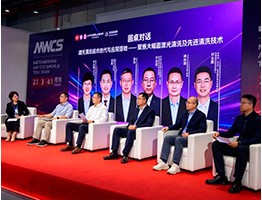 XZQ 2026 Laser Cleaning Summit Debuts at CIIF, Explores Scalable Applications
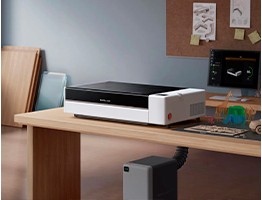 Bambu Lab Enters Lasers, Extending from 3D Printing to Desktop Manufacturing
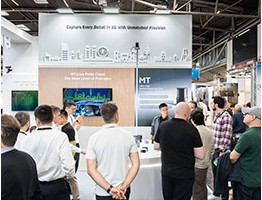 Hesai Inks Two Strategic Partnerships, Unveils MT-Series Lidar
 RMB 6B+ Investment Adds New Player to Jiangsu's Laser Industry Landscape
 Order Frenzy: Laser Earnings Reveal 10B+ Backlogs — Who Wins?
 Kuntai Laser: Full-Stack Solutions for Laser Intelligent Equipment and Manufacturing Upgrades
 Thunder Laser's Chen Biqin: Two Decades of Laser Self-Reliance
 Yang Gaojie, Rationalite Photonics: 3D Optical Computing to Break AI's Compute Wall
 Kingfit's Jin Songqing: Powering the Laser Industry Chain with Advanced Cooling Technology
 Laserion: Breaking Ultrafast Laser Bottlenecks to Industrialize Homegrown High-End Sources