
Four Laser Labs Launched! Industry-Academia-Research Integration Accelerated
source:Laserfair.com
keywords:
Time:2026-04-07
Source: Laserfair.com 25th Mar 2026
In early spring 2026, China's laser industry ushers in a boom of industry-academia-research collaborative innovation. Within just one month, four high-level laser laboratories and studios have been launched or inaugurated successively, covering strategic fields such as basic science, aerospace, marine engineering and high-end manufacturing.

Among them, Shandong's first international top scientist studio is headed by Ferenc Krausz, Nobel laureate known as the "Father of Attosecond Laser"; Nanjing University of Aeronautics and Astronautics has joined hands with Maxphotonics to integrate aerospace-grade thermal control technology into civilian laser equipment; Harbin Engineering University and Hengtong Group have jointly established a Joint Research Institute for High-end Marine Intelligent Equipment to deepen the Deep Blue Strategy; global laser giant Luxinar has opened its China Application Laboratory in Shanghai, fully upgrading its localized service capacity.
The intensive establishment of these four industry-academia-research platforms will accelerate the progress of China's laser industry toward the high end of the global value chain.
Top Talent Backing
Nobel Laureate Leads Shandong Attosecond Laser Studio
On March 16, Shandong’s first international top scientist studio–the Krausz Attosecond Laser Studio of the Laser Research Institute of Shandong Academy of Sciences – was officially launched in Jinan. Ferenc Krausz, known as the "Father of Attosecond Laser" and Nobel laureate, serves as the studio director, injecting top intellectual support into China’s attosecond laser technology research.
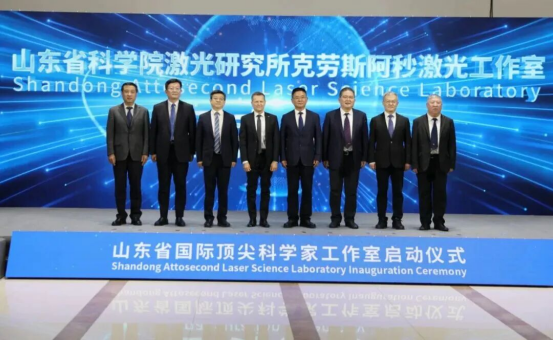
As the shortest time scale mastered by humanity, one attosecond equals 10^-18 seconds. Acting like an "ultra-high-speed camera", attosecond laser technology can capture electron motion trajectories, enabling breakthroughs in biomedicine, precision material processing, electronics and other fields.
The studio focuses on strategic and pioneering technical issues in attosecond lasers, building a full-chain innovation system of "basic research–technological breakthrough–industrial empowerment". It is committed to breaking the time resolution limit of ultrafast lasers and promoting cross-disciplinary applications of the technology.
As a core cluster of the laser industry in northern China, Shandong has an industrial scale exceeding 20 billion yuan. The introduction of this world-leading scientific team aims to seize the commanding heights of attosecond science, laying technical groundwork for the next industrial upgrade in biomedicine, precision manufacturing, electronic information and other sectors in Shandong and across China.
Cross-Border Empowerment Breakthrough
NUAA and Maxphotonics Co-Build LabSolving Laser Heat Dissipation Challenges
On March 19, the Joint Innovation Laboratory for Advanced Laser and Key Application Technologies co-built by Nanjing University of Aeronautics and Astronautics (NUAA) and Shenzhen Maxphotonics Co., Ltd. was officially inaugurated, empowering the upgrading of laser equipment with cutting-edge aerospace thermal control technologies and breaking core industry bottlenecks.
As a "national team" in the aerospace field, NUAA relies on two Double First-Class disciplines and has decades of engineering experience in extreme environment thermal control and precision gas control. Its aerospace-grade pure air-cooled heat dissipation technology, tempered by extreme scenarios such as satellites and aero-engines, represents the highest industrial standard in thermal management.
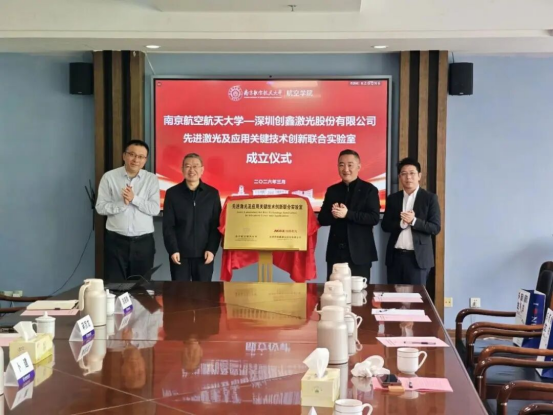
In this cooperation, NUAA has opened its aerospace thermal control system to target common industry problems including insufficient efficiency and poor stability of air-cooled lasers. By integrating pure air-cooling technology into the R&D system, the equipment is freed from reliance on chillers and cooling fluids.
Leveraging this technology, Maxphotonics’ Huanri handheld laser welder has achieved full-scenario adaptability, completing the upgrade from "usable" to "practical" and "durable".
Deep Dive into Marine Sector
Harbin Engineering University Joins Hands with Hengtong Groupto Co-build "Joint Research Institute"
On March 22, Harbin Engineering University and Hengtong Group held a strategic cooperation signing ceremony and jointly inaugurated the Joint Research Institute for High-end Marine Intelligent Equipment, focusing on technological breakthroughs in laser and intelligent equipment for the marine sector to support the implementation of the national maritime power strategy.
The event was attended by many industry leaders including Fan Dianyuan, academician of the Chinese Academy of Engineering. The two parties also signed an agreement on co-building a national-level innovation center and the first batch of cooperation projects.
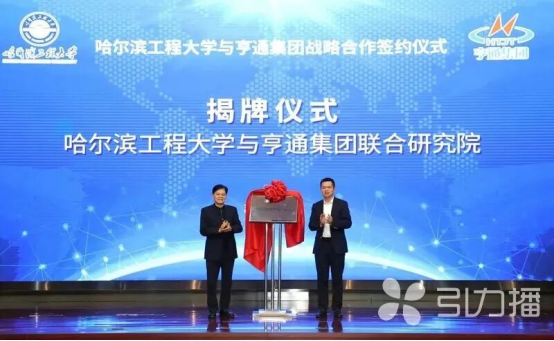
Harbin Engineering University, as a core national research base in the fields of marine vessels, ocean engineering, marine development and nuclear energy, has long been deeply engaged in shipbuilding and marine development, cultivating a large number of high-quality talents and boasting profound expertise in underwater technology R&D. Hengtong Group, a global leader in optical fiber communication, has strong capabilities in marine engineering and dynamic submarine cables.
Pursuant to the agreement, the two parties will focus on key areas including underwater communication, subsea oil and gas development, and integrated special pipelines and cables. They will promote full-chain integration of basic research, technological breakthroughs, achievement transformation and talent cultivation, aiming to build the Joint Research Institute into an innovation hub for high-end marine intelligent equipment.
Global Giant Steps Up Investment
Luxinar Shanghai Lab Reshapes Service Ecosystem
Recently, global laser giant Luxinar (formed by the integration of Iradion and Luxinar) has officially established and operated its China Application Laboratory in Shanghai, marking an upgrade of its China market strategy from product sales to "in-depth services and collaborative innovation".
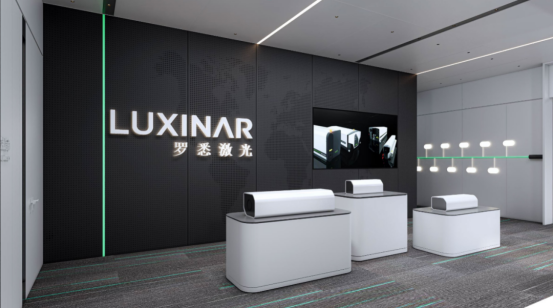
As a key part of the brand's global service network, the laboratory collaborates with laboratories in Germany, the UK, the US and other regions, providing Chinese customers with end-to-end localized support including sample testing, process verification and system selection, greatly shortening customer verification cycles.
The China Application Laboratory focuses on industrial CO₂ laser applications, serving electronics, automotive, thin film and other industries. Equipped with 2D scanning systems, vacuum platforms and other equipment, it can integrate lasers of different power levels and support various processing modes, covering full processes such as cutting, engraving and drilling. The system features a modular design for flexible upgrade and expansion.
 Five Laser Firms See Executive Reshuffles: Younger Leaders Take the Helm
 30+ Laser Startups Storm 2026: Who's Positioning for the Future?
 Three Chinese Laser Makers Expand Into South Korea: Raycus, YIFI and Strong Laser
 Hyperline Debuts at ESSEN 2026 with Premium Laser Welding Solutions
 56 Benchmarks Honored: 9th Secret Light Awards Highlights China Laser Chain Innovation
 Glitterin Tech's Three Photonic Pillars: Building the Optical Backbone of the AI Era
 A Female Pioneer's 20-Year Quest for World-Leading Laser Thin Film Breakthroughs
 HSG Laser's He Hongming: Innovation Drives Laser Manufacturing Future
 Xi Jingyu from Mingyu Technology: Carving the Future of Hometown Industries with Laser
 Qiming Photonics: Nobel-Powered "Optical Engine" for the Computing Age