
2026 Laser Industry Breakthrough: Insights from Five Top Industry Leaders
source:Laserfair.com
keywords:
Time:2026-03-02
Source: Laserfair.com 3rd Feb 2026
At the start of 2026, the laser industry is faced with a profound soul-searching reckoning: cutthroat competition has reached a fever pitch, formidable barriers stand in the way of overseas expansion, the commercial rollout of AI technologies is mired in difficulties, and anxiety over strategic transformation is mounting—so where exactly lies the path to breakthrough?
At this critical juncture, five prominent industry leaders have recently delivered weighty, forward-looking insights. They are Ruan Shuangchen, former President of Shenzhen Technology University; Professor Zhang Han from Shenzhen University; Huang Zhijia, Chairman of JPT Opto-electronics; Zhu Dengchuan, General Manager of Han's Photonics; and Zhao Dongjing, General Manager of Weihong Co., Ltd.
From core dimensions including the national strategic layout of photonic technology, in-depth forecasts of industry trends, and practice-proven breakthrough paths for intelligent upgrading, they have charted a clear course forward for an industry navigating widespread uncertainty.
Ruan Shuangchen
Bridging the "Last Mile" to Reshape the Ultrafast Laser Industry Ecosystem
At the 2026 Guangdong Provincial People's Congress and Chinese People's Political Consultative Conference (CPPCC) Sessions, Ruan Shuangchen, member of the Guangdong Provincial Committee of the CPPCC and former President of Shenzhen Technology University, pointed out that ultrafast laser technology is a critical enabling technology for high-end manufacturing. Addressing the weaknesses in Guangdong's current support system for laser technology commercialization, including fragmented resources and a disconnect between R&D and industrialization, he proposed adhering to the principle of“optimizing mechanisms and focusing on practical application”to bridge the“last mile”from the laboratory to the production line.
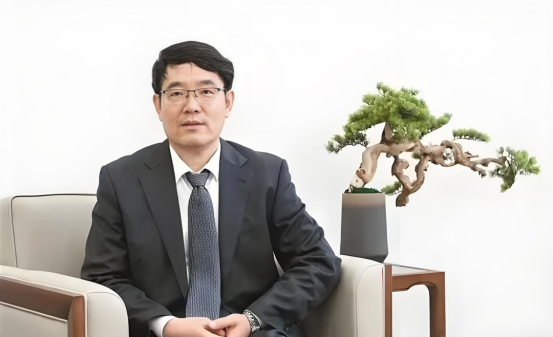
To this end, Ruan put forward three systematic recommendations. First, a special program should be established for advancing the technological maturity of ultrafast laser products, which will precisely align with existing key R&D and first-set equipment policies to strengthen the engineering chain. Second, existing high-level platforms should be endowed with the new function of industrial public certification, and an authoritative testing and evaluation hub should be built by expanding their functions and strengthening performance assessment. Third, a new mechanism of“chain leaders setting R&D topics, with results recognized accordingly”should be implemented, encouraging chain-leading enterprises such as Huawei and BYD to release R&D lists, collaborating with leading companies to provide scenario support, and optimizing the orientation of talent evaluation.
Ruan stated that by taking enterprises as the leading force and the market as the benchmark, a full-chain innovation ecosystem should be built to drive a qualitative leap for Guangdong’s ultrafast laser technology from“existing in the lab”to“optimally applied on production lines”, injecting core impetus into high-end manufacturing.
On January 26, during the panel discussion of the Fourth Session of the 13th Guangdong Provincial Committee of the Chinese People’s Political Consultative Conference (CPPCC), Zhang Han, member of the Guangdong Provincial CPPCC and professor at the College of Physics and Optoelectronic Engineering, Shenzhen University, put forward a key proposal: photonics should be included as a strategic emerging industry and given top-level policy support.
Zhang Han pointed out that global technological competition has entered the“photonics era”. Featuring light-speed computing and ultra-low power consumption, photonic artificial intelligence represents a critical path to breaking through the computing power bottleneck of electronic chips. It can operate nearly a thousand times faster than traditional chips with only 1% of the energy consumption, making it irreplaceable in fields such as autonomous driving and medical imaging.
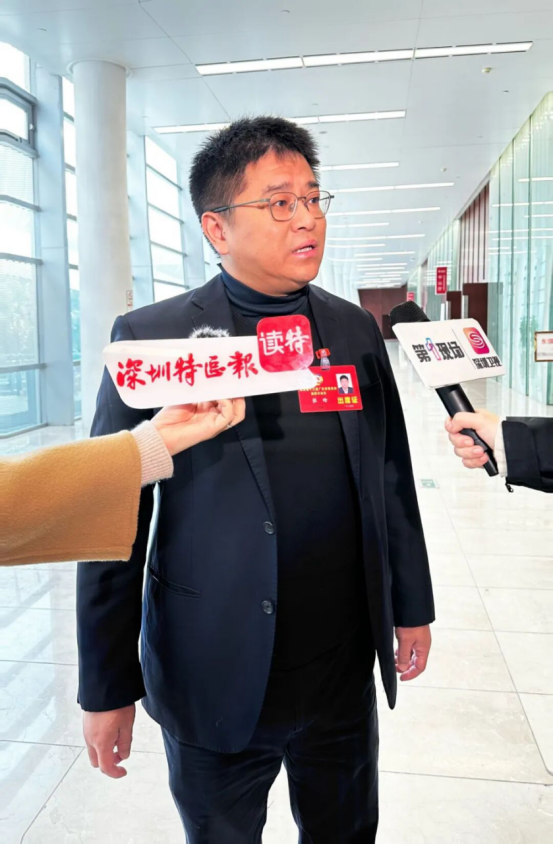
Nevertheless, China's photonics industry still faces severe challenges. “We remain dependent on foreign sources for key materials and core components, and the domestic production rate of high-end photonic chips is below 30%,”Zhang noted.
To address these issues, he put forward three major proposals. First, strengthen the origin of original innovation by relying on platforms such as Peng Cheng Laboratory and allowing exploratory failures in 0-to-1 breakthroughs. Second, build a full-chain tackling system and overcome bottlenecks in EDA tools, photoresist and other core technologies through the“project bidding mechanism”. Third, build a leading demonstration zone for“photonics + AI”applications in Shenzhen, and drive the commercialization of technologies through open application scenarios.
“The competition for photonic artificial intelligence is, in essence, a contest for dominance in future industries,”Zhang emphasized. only by granting it the highest strategic priority can China seize the commanding heights in global technological competition and contribute a“Guangdong Solution”to achieving greater self-reliance and strength in science and technology at a high level.
Huang Zhijia
Six Key Words for 2026:
Industry Consolidation Enters Its Final Stage
On January 11, Huang Zhijia, President of the Guangdong Laser Industry Association and Chairman of JPT Opto-electronics, delivered a systematic review of the laser industry’s performance in 2025 and outlined six key words to define trends for 2026 at the China Laser CEO Summit & Annual Gala.
According to Huang, 2025 marked a pivotal year of deep industry adjustment and a shift toward quality-first development, characterized by four major trends: the conclusion of structural adjustments, accelerated capacity clearance, clear policy guidance, and growing product differentiation. Meanwhile, enterprises faced mounting challenges, including intensified internal competition, higher barriers to overseas expansion, and rising cash flow risks. Companies that broke through against the headwinds generally shared three strengths: focusing on new-quality productive forces, upholding technological accumulation, and concentrating on niche segments.
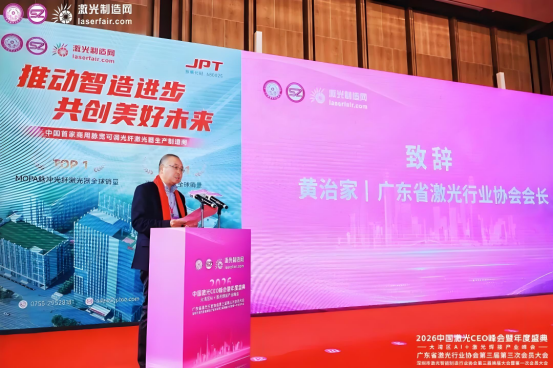
Looking ahead to 2026, Huang stressed that the industry will enter a deeper phase of transformation, and outlined the landscape using six key words:clearance, price system restructuring, industrial depth, ultrafast laser segmentation, organizational efficiency, and overseas market cool-down period.
Huang also called on the industry to respect basic business sense and reject bottomless price wars; pursue specialization, refinement, differentiation and innovation to become smaller, better and more sustainable; and promote collective overseas expansion by building stronger systems for quality, service and compliance. only in this way can the industry secure steady growth in the new round of restructuring.
Zhu Dengchuan
Addressing the "Three Major Disconnects"
with a Comprehensive Six-Dimensional Upgrading Playbook
In January 2026, Zhu Dengchuan, General Manager of Han's Photonics, pointed out at the Greater Bay Area AI + Laser Welding Industry Summit that the laser welding sector is facing profound "Three Major Disconnects": the disconnect between the intelligentization vision and the automation-only reality, the disconnect between cost reduction pressures and long-term value creation, and the disconnect between global expansion ambitions and localized operational capabilities.
"Many solutions still remain at the basic automation level, and cannot adapt to dynamic process requirements," Zhu added. He also noted that cutthroat low-price competition is eroding the fundamental foundation of R&D investment, while global expansion is fraught with challenges in meeting international standards, building brand reputation, and establishing a complete local ecosystem.
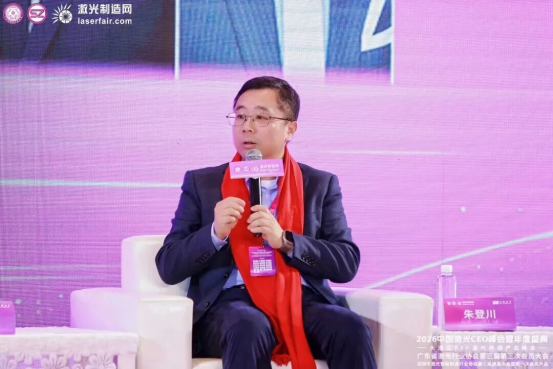
To break through these bottlenecks and move forward, he put forward "six critical dimensions of upgrading" for 2026. Intelligent upgrading achieves the leap from basic automation to independent decision-making, turning equipment into intelligent agents capable of adapting to unknown working conditions. Value upgrading rejects cutthroat low-price competition and realizes "value co-creation" through technology enablement. Meanwhile, the simultaneous upgrading in global expansion, collaborative development, foundational capability building, and strategic mindset will comprehensively reshape the core competitiveness of enterprises, driving the shift from product export to ecosystem building, from parameter competition to fundamental innovation, and from equipment supplier to industry enabler.
In closing, Zhu Dengchuan emphasized that returning to the essence of technology, upholding long-termism, and deepening collaborative and symbiotic development are the core driving force to navigate through the uncertainties of industry cycles.
Zhao Dongjing
Ease AI Anxiety in Manufacturing
Deliver Tangible Value Through Targeted, Down-to-Earth Actions
In January 2026, at a think tank roundtable forum held in Shanghai, Zhao Dongjing, General Manager of Weihong Co., Ltd., pointed directly to the core pain point of AI transformation in the manufacturing industry: "The biggest bottleneck lies not in algorithms, but in data and organization."
Zhao Dongjing shared his frontline observations: a large number of aging equipment in factories lack sensors, becoming "silent data islands". Without stable and accurate data flow, subsequent AI analysis and optimization are simply out of the question. This reveals the reality that intelligent upgrading must start from the "source" at the physical layer.
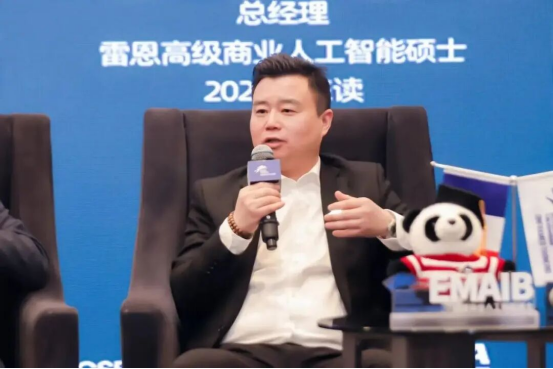
based on this, Weihong Co., Ltd. has adopted a practical AI implementation path: instead of pursuing "large-scale, all-in-one solutions", it starts with key equipment and processes to solve the most valuable pain points first. Meanwhile, by setting up small cross-functional teams and assessing them against clear business objectives, the company breaks down departmental silos to ensure AI serves business performance improvement.
Looking ahead, Zhao Dongjing forecasted that the pure sales model of hardware controllers will undergo a transformation. The core of future competition lies in integrated solutions of "controller + software + data + service". only by staying rooted in real business needs and delivering solid, tangible value can enterprises ease their transformation anxiety.
 Order Frenzy: Laser Earnings Reveal 10B+ Backlogs — Who Wins?
 AI Compute Land Grab: What 30 Laser Earnings Reports Reveal
 Action-Cam Pioneer's Optical Pivot? GoPro to Sell Itself to Optics Firm for $285M
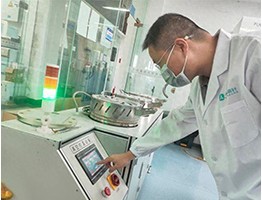 Wuhan Team "Grows"Next-Gen Photovoltaic Film to Let Solar Panels Harvest More Sunlight
 Vietnam Plant + Europe Upgrade: Laser Leader Deepens Global Push
 Yang Gaojie, Rationalite Photonics: 3D Optical Computing to Break AI's Compute Wall
 Kingfit's Jin Songqing: Powering the Laser Industry Chain with Advanced Cooling Technology
 Laserion: Breaking Ultrafast Laser Bottlenecks to Industrialize Homegrown High-End Sources
 XTRI-tech's Yao Caihong: Building High-End Manufacturing
 Glitterin Tech's Three Photonic Pillars: Building the Optical Backbone of the AI Era