
Guan Weiwei, Davi Laser: RF CO2 Substitution and a Dual-Track Push Against Industry Cycles
source:Laser Manufacture News
keywords:
Time:2026-11-25
Source: Laser Manufacture News 24th Oct 2026
RF CO2 lasers are a core light source in precision processing and were long monopolized by overseas manufacturers. High prices and long lead times once constrained the development of China's high-end manufacturing. Since launching independent R&D on RF CO2 lasers in 2008, Shanxi Davi Laser Technology Co., Ltd. has been rooted in Taiyuan. After more than a decade of sustained effort, the company has built an integrated intelligent manufacturing base covering R&D, production, and sales, continued to advance the localization of core components, and carved out a distinctive path toward domestic substitution.
Facing cyclical fluctuations in the laser industry, Davi Laser has established a dual-engine strategy built around "semiconductor/pan-semiconductor + consumer CO2 lasers." The company focuses on the semiconductor track as its primary direction, tackling high-end light sources and process solutions, while leveraging mature industrial laser technology to develop consumer-grade products and open a second growth curve. Through a combined strategy of "R&D depth + production capacity breadth + supply chain security," and by relying on a shared underlying technology platform, flexible production lines, and self-developed core components, the company hedges against industry cycle risks.
Domestic RF CO2 hardware is gradually achieving substitution, but insufficient accumulation of high-end process technology and limited global patent coverage remain industry weaknesses. Laser Manufacture News recently interviewed Guan Weiwei, Chairman of Shanxi Davi Laser Technology Co., Ltd., to review the company's entrepreneurial journey, explain the operating logic behind its parallel dual-track strategy, analyze the opportunities and challenges in the RF CO2 sector, share the company's five-year strategic plan, and explore how domestic laser companies can break out of low-price competition and move into global markets.
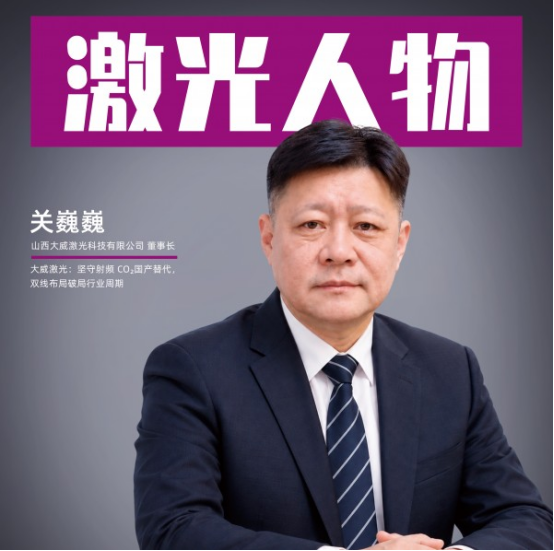
Guan Weiwei, Chairman of Shanxi Davi Laser Technology Co., Ltd.
Laser Manufacture News: From launching R&D on RF CO2 lasers in 2008 to now building an integrated intelligent manufacturing base in Taiyuan, Shanxi, covering R&D, production, and sales—looking back on your entrepreneurial journey, what was the opportunity that made you firmly commit to the domestic substitution track for RF CO2 lasers? And what challenge left the deepest impression along the way?
Mr. Guan: In 2008, China's RF CO2 market was completely monopolized by overseas players, with high prices and slow deliveries, leaving high-end manufacturing bottlenecked. But the demand driven by China's manufacturing upgrading was clear, and I judged that domestic substitution was the general trend, so we started R&D. The challenge that left the deepest impression was the leap from prototype to mass production. We could match overseas benchmarks in laboratory indicators, but for mass-production consistency, cavity sealing, and other processes, there were no ready references, and the supply chain was weak. We had to tackle underlying processes while also helping the local supply chain grow, turning laboratory technology into stable, deliverable commercial products. That was the hardest hurdle.
Laser Manufacture News: In advancing the full localization of core components, how has Davi Laser solved common industry challenges such as process stability and mass-production consistency? What are the competitive strengths of the company's flagship core products?
Mr. Guan: We develop and produce all core components in-house and have locked in a complete set of process parameters. We have built a Class 1,000 cleanroom, use ERP-enabled digital traceability across the entire process, and put every machine through rigorous aging tests. At the same time, we work with upstream suppliers to control incoming material quality at the source, which solves the mass-production stability challenge. Our main models benchmark against international products, offer a 50,000-hour long lifespan, are suited to 24-hour semiconductor production lines, cost less, and can be customized. For consumer-grade light sources, we have miniaturized industrial optical paths and paired them with a software and content ecosystem, delivering strong cost-performance.
Laser Manufacture News: Semiconductor/pan-semiconductor is your core strategic track, and your products serve semiconductor and related production lines. At what stage is the domestic substitution of semiconductor laser light sources in China? How do you view the market opportunities and real pressures in this track?
Mr. Guan: Low- and medium-power RF CO2 has already achieved large-scale domestic substitution, but in process solutions for frontier semiconductor/pan-semiconductor scenarios, there is still a gap with overseas players. We are in a stage where hardware is gradually catching up while process know-how continues to be built up.
The opportunity lies in the expansion of China's PCB and AI computing chip industries, with customers increasingly valuing supply chain autonomy and controllability and fast local service. The pressure comes from the long validation cycles in semiconductor/pan-semiconductor, the accumulation of high-end process expertise, and overseas patent barriers, all of which require long-term effort.
Laser Manufacture News: The company has established a dual-engine strategy built around "semiconductor/pan-semiconductor + consumer CO2 lasers." Why did you decide to develop consumer lasers as a second growth curve?
Mr. Guan: First, it helps hedge against cyclical swings in industrial markets, because consumer demand cycles do not fully align with industrial cycles. Second, we already have mature industrial light source technology that can be adapted and scaled down directly, so we do not need to start R&D from scratch.
At the same time, the DIY, cultural and creative, and maker education markets are showing clear growth, and existing products on the market have shortcomings. We can also leverage our overseas dealer network across more than 20 countries, using one technology foundation to open up new growth space.
Laser Manufacture News: On the industrial side, you provide customized light sources, process development, and full lifecycle maintenance. On the consumer side, you offer lightweight modules and a software and content ecosystem. The products and customer groups are very different. How does the company balance resources internally to pursue both lines in parallel?
Mr. Guan: We share the underlying technology platform, including optical paths and RF power supplies, while splitting the business at the upper layers. For R&D, we use a "shared platform team plus dedicated industrial and consumer teams" model, with unified work on underlying technologies and separate product iteration.
For production, the Taiyuan base retains flexible lines that can switch between the two product types. Market service is handled by two independent teams: the industrial team focuses on customization and on-site maintenance, while the consumer team focuses on hardware and the software and content ecosystem. The result is shared technology, separate operations, and no mutual interference.
Laser Manufacture News: Amid cyclical fluctuations in the laser industry, how does Davi Laser use its "R&D depth + production capacity breadth + supply chain security" strategy to withstand industry cycle risks?
Mr. Guan: R&D depth comes from a research team with a high proportion of staff and strong retention. We continue building technology reserves across both tracks and keep iterating even during downturns. Production capacity breadth comes from a large-scale flexible intelligent manufacturing base that can switch between industrial and consumer products and from a presence in domestic and overseas markets that spreads risk. Supply chain security comes from in-house development of core components and cultivation of local suppliers, reducing the risk of external supply cutoffs and price increases. Together, these three elements help offset industry cycles.
Laser Manufacture News: Building on its current foundation, what is Davi Laser's overall development strategy for the next five years? What are your plans and goals in technology development, track expansion, and market layout?
Mr. Guan: From 2026 to 2030, we will continue to focus on semiconductors and pan-semiconductors as our core, with consumer lasers as the second growth curve. On the technology side, we will iterate high-end light sources and develop ultrafast CO2 lasers and AI-driven pulse algorithms. On the consumer side, we will complete the light source matrix and build a cloud-based software ecosystem.
Domestically, we will deepen our presence in the semiconductor clusters of the Yangtze River Delta and Pearl River Delta and open up e-commerce and campus consumer channels. Overseas, we will expand through our existing channels. We will complete the intelligent upgrade of the Taiyuan base and build coordinated production capacity at home and abroad. We aim to upgrade from a light source supplier to a "light source + process" solution provider and build a global DAVI brand.
Laser Manufacture News: Competition in China's laser industry is intensifying, and the independent controllability of upstream core components remains an important industry issue. What development trends do you see in China's RF CO2 laser sector over the next few years, and what shortcomings still need to be addressed?
Mr. Guan: The trend is that domestic substitution will continue to penetrate high-end semiconductor and pan-semiconductor scenarios, and competition will shift from hardware comparisons to comprehensive capabilities in hardware, process, and service. The sector will also diverge: some companies will go deep into high-end industrial applications, while others will bring technology downstream into consumer markets. Chinese products will accelerate their global expansion. The main shortcomings are insufficient accumulation of high-end process know-how, upstream supporting capabilities that still need to be cultivated, and relatively weak global patent coverage. Many companies focus on hardware while paying less attention to process and ecosystem development. These are areas the industry needs to strengthen.
Laser Manufacture News: Your vision is to build a world-class laser company. Looking ahead, what role does Davi Laser hope to play in the global laser industry landscape, and what are your expectations for the company and for China's domestic laser industry?
Mr. Guan: We hope to become an important Chinese force in the global RF CO2 field: breaking overseas monopolies in high-end semiconductors while bringing the benefits of laser technology to ordinary makers around the world. We do not want to be only a product exporter; we also want to help the domestic upstream and downstream supply chain grow together. I hope the industry will reduce destructive low-price competition, go deeper into underlying technologies, and address shortcomings in process, supporting capabilities, and patents. We should not only achieve import substitution at home, but also truly bring Chinese laser technology and brands to the world.
 Shenzhen Double Header: APEC for Openness, Laser Conference for Smart Manufacturing
 World Laser Manufacturing Conference, XZQ 2027: First Announcement
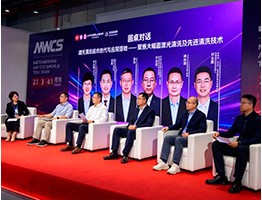 XZQ 2026 Laser Cleaning Summit Debuts at CIIF, Explores Scalable Applications
 Bambu Lab Enters Lasers, Extending from 3D Printing to Desktop Manufacturing
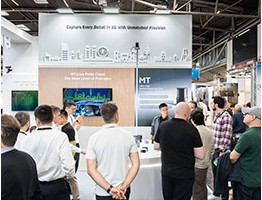 Hesai Inks Two Strategic Partnerships, Unveils MT-Series Lidar
 CAE Academician Yang Zhongmin: Laser Competitiveness Rests on Tech, Scenarios, Standards
 MM MaschinenMarkt Exclusive Interview with Dr. Song You
 Kuntai Laser: Full-Stack Solutions for Laser Intelligent Equipment and Manufacturing Upgrades
 Thunder Laser's Chen Biqin: Two Decades of Laser Self-Reliance